WHO WE ARE
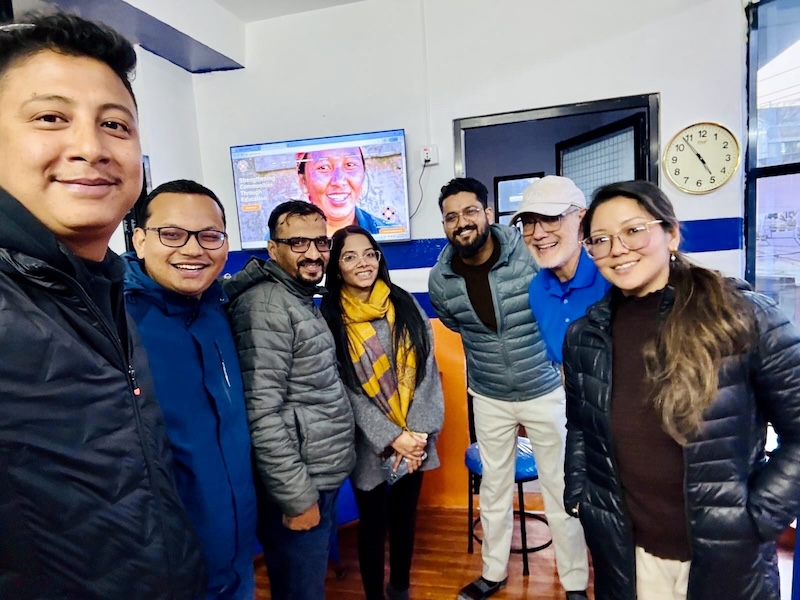
A small team. A big mission. Real results — in some of the most remote places on earth.
What drives us
Everything we do comes back to three things.

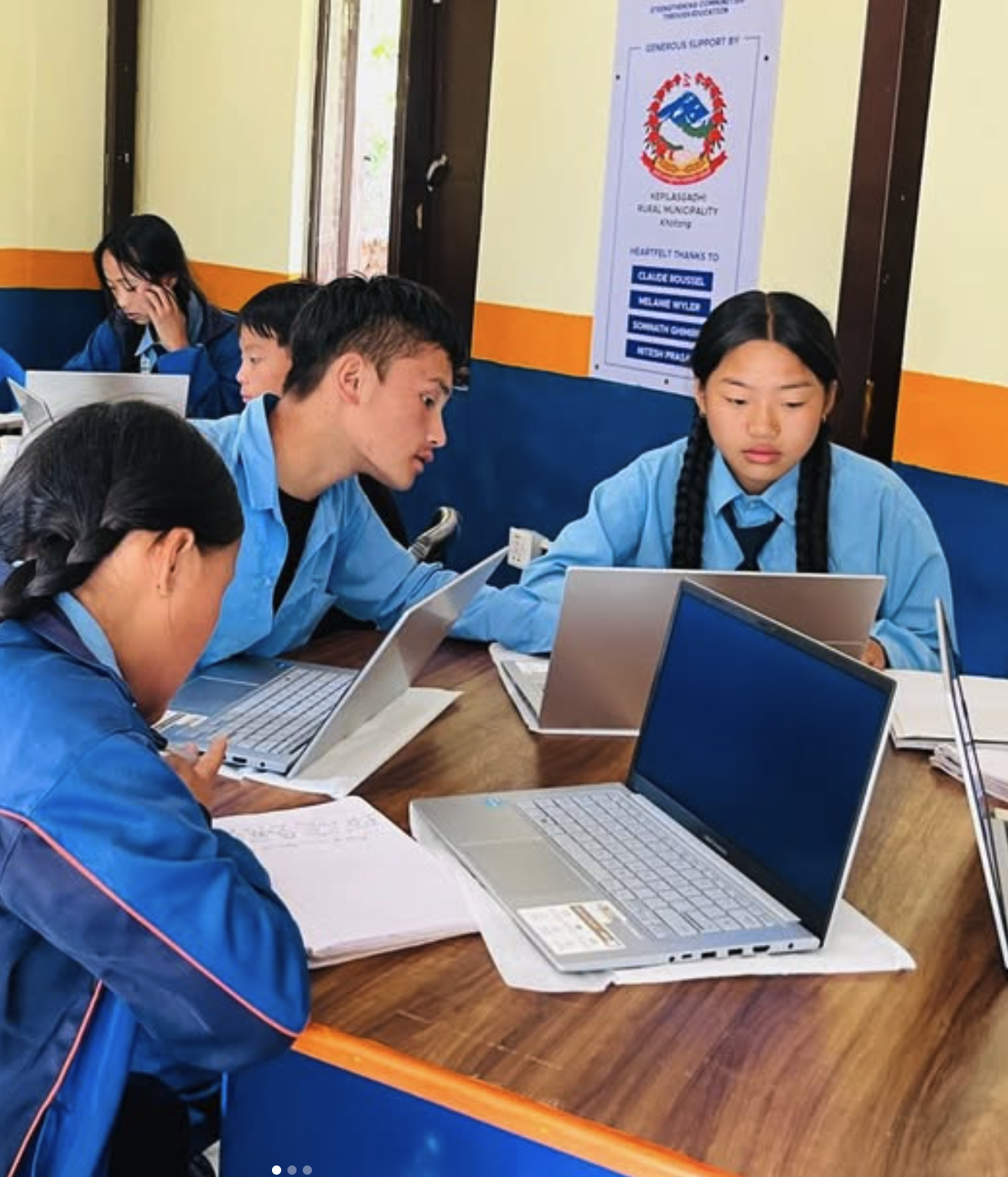
Strengthen communities through education by equipping schools in underserved areas of Nepal with innovative pedagogy and modern technology

Our Vision is to motivate people to remain and evolve in rural areas, giving them the technological tools and opportunities necessary to prosper.

We make inovative education accessable & effective beyond the textbook via technology so families have a sustainable ecosystem to boost their local economy.
HOW WE GOT HERE!
A SMALL IDEA THAT REFUSED TO STAY SMALL.
Our founder, Edmond Antoine had already made seven trips to Nepal before April 2015 and 17 after 2015. He’d fallen in love with the country — its resilient people, its landscapes, its spirit. Then the earthquake hit, killing nearly 9,000 people and destroying communities across the country. Ed, a French-born executive coach living in the US, felt he couldn’t just watch. He founded Altruistic Odyssey — a 501(c)(3) nonprofit — and began mobilizing support. What started as disaster relief quickly became something more lasting.
Your support today is part of that same thread that started in 2015.
Two years after the earthquake, our team visited a rural school and did something simple: we created a library room and filled it with computers. It wasn’t sophisticated. But the response from students and teachers was immediate. Community leaders told us clearly what they needed most — not more relief, not more aid, but access to modern education. That feedback changed everything about how we thought about our work.
That one room taught us that the right resource, in the right place, is more powerful than any donation.
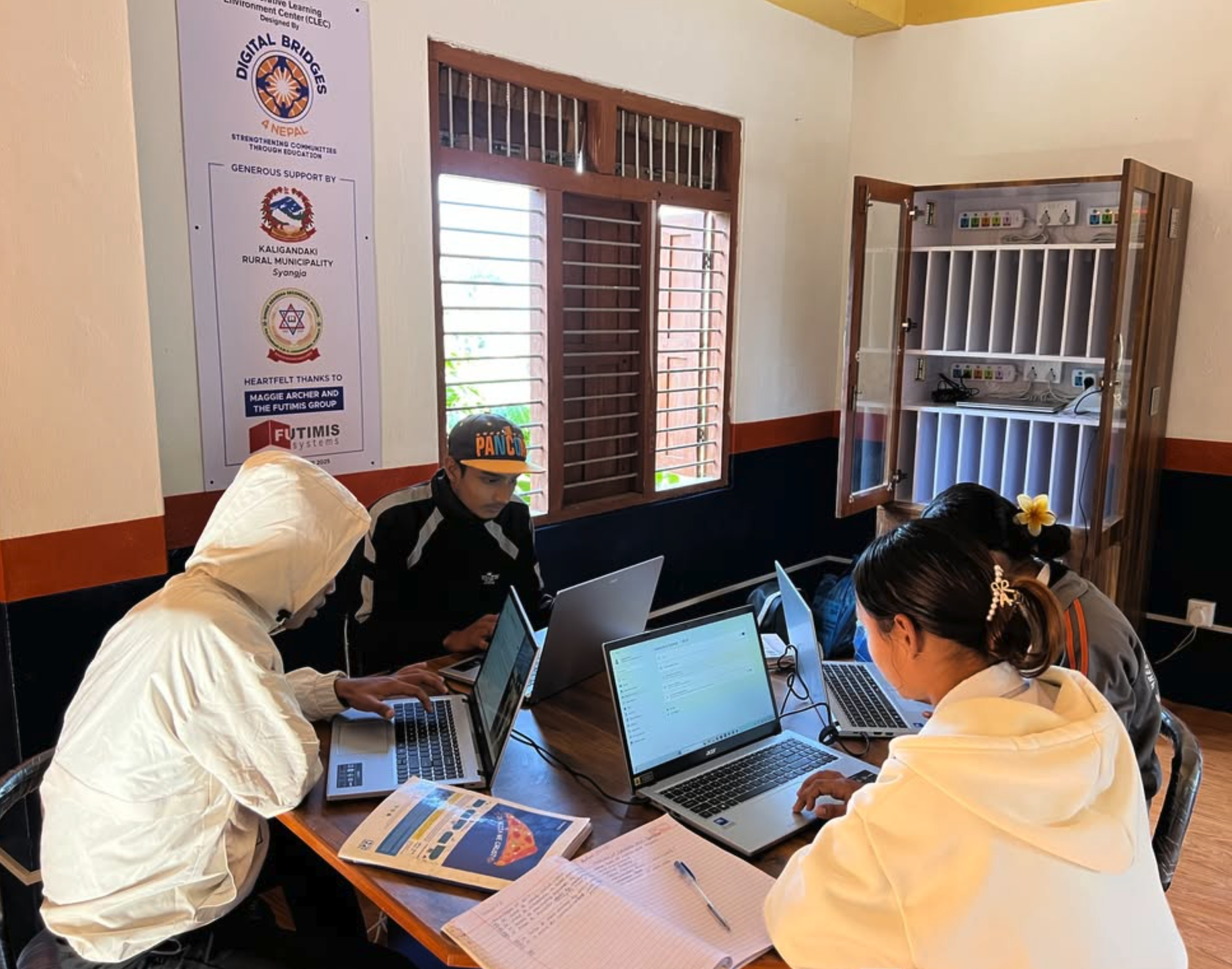
Sotang is a remote village in Solukhumbu, reached by crossing a suspension bridge over the Dudh Koshi River. The campus head, Ishwor Timalsena, had a problem: Nepal’s education ministry required fourth-year student teachers to complete ICT training, but the school had no way to deliver it. We partnered with them and built something new: a Collaborative Learning Environment Center — a purpose-designed room combining technology, collaborative furniture, and a completely different way of teaching. Students who had never completed their ICT requirements now could. One graduate, Ang Datee Sherpa, went on to pursue a Master’s degree with plans to return and teach in rural Nepal. The CLEC model was proven.
Every CLEC we build today traces its DNA back to that first room in Sotang.
When COVID-19 arrived in 2020, the world went remote. But our team in Nepal, led by Jhabindra Subedi, pushed forward – supported by key KUSOED allies: Associate Dean Shesha Kanta Pangeni, whose ICT and distance learning expertise proved critical, and Rebat Kumar Dhakal, Head of the Educational Leadership department and coordinator of the Research and Innovation Center. The CLEC at KUSOED launched in early 2020, adapted to hybrid learning with remote-controlled cameras and smart screens – technology that turned out to be exactly what a pandemic-era classroom needed.
The model didn't just survive the disruption. It thrived.
When everything shut down, the CLEC proved it was built for the future — not just the present.
In 2022, Altruistic Odyssey became Digital Bridges 4 Nepal — a name that says exactly what we do. Today, we support 20 active CLEC sites across 10 regional hubs in 4 provinces of Nepal. Our partnership with Kathmandu University now includes accredited credit courses for educators in the CLEC method — meaning the teachers we train earn recognized qualifications. KUSOED’s own research confirms what we see on the ground: 92% of students report improved learning performance, and 95% show increased interest in their studies. We have a formal research partnership with KUSOED’s Research and Innovation Center. And we have a clear goal: 100 CLECs by 2030, reaching 100,000 students and training 3,000 teachers in a new way to teach.
We know exactly where we’re going. The question is will YOU join us?
Follow us on instagram