

.jpg)




.jpg)
Our Locations
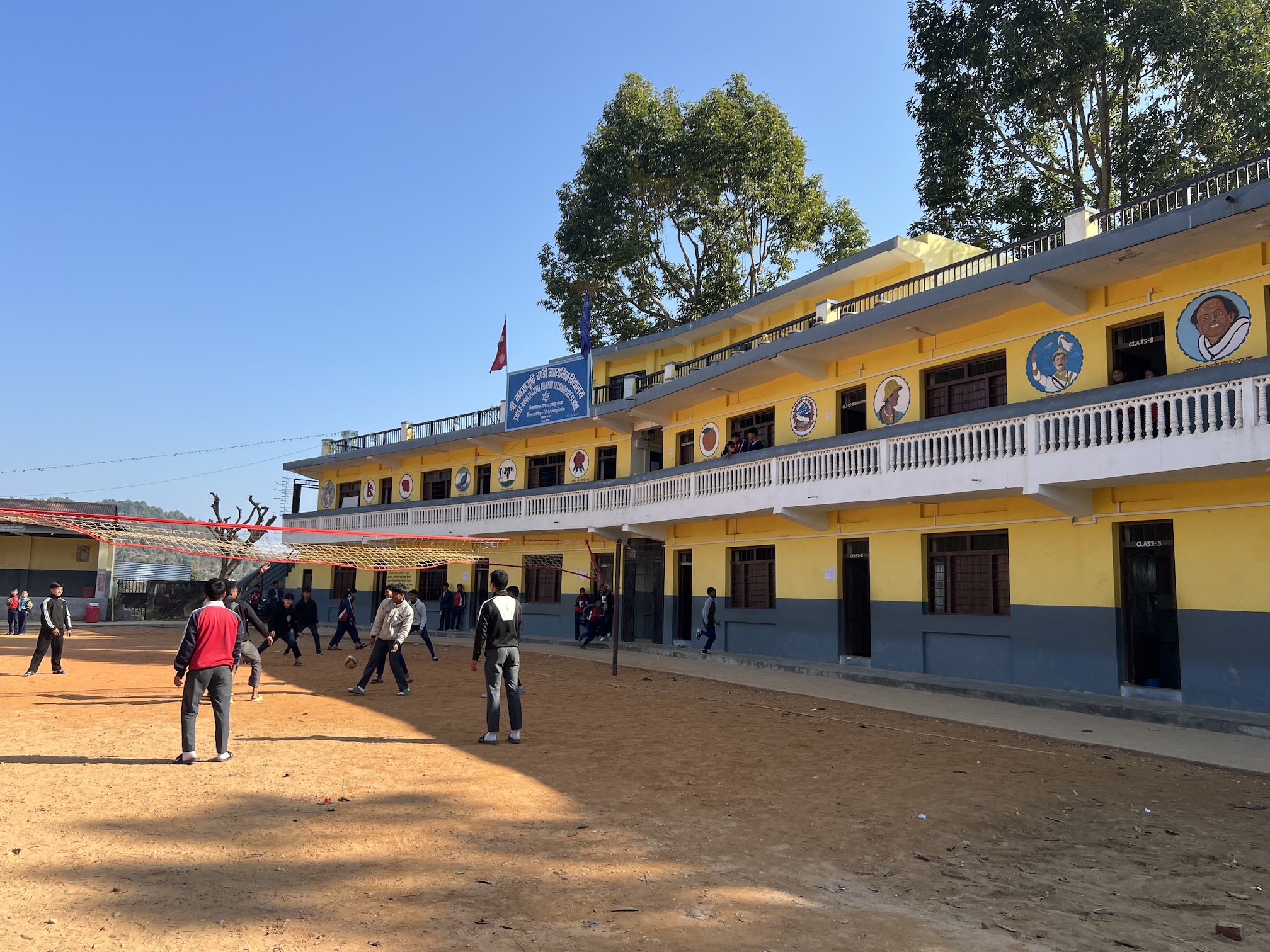
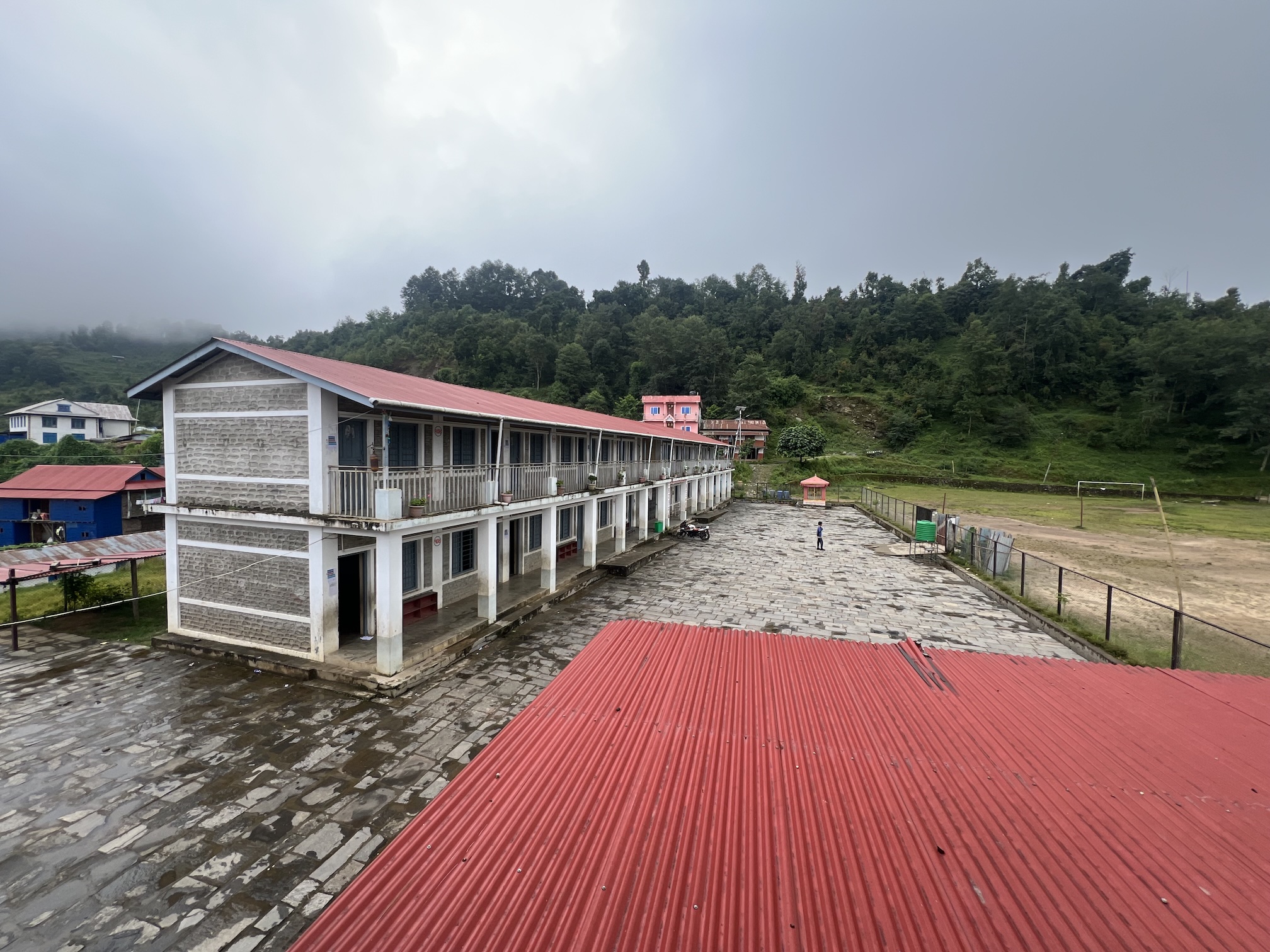
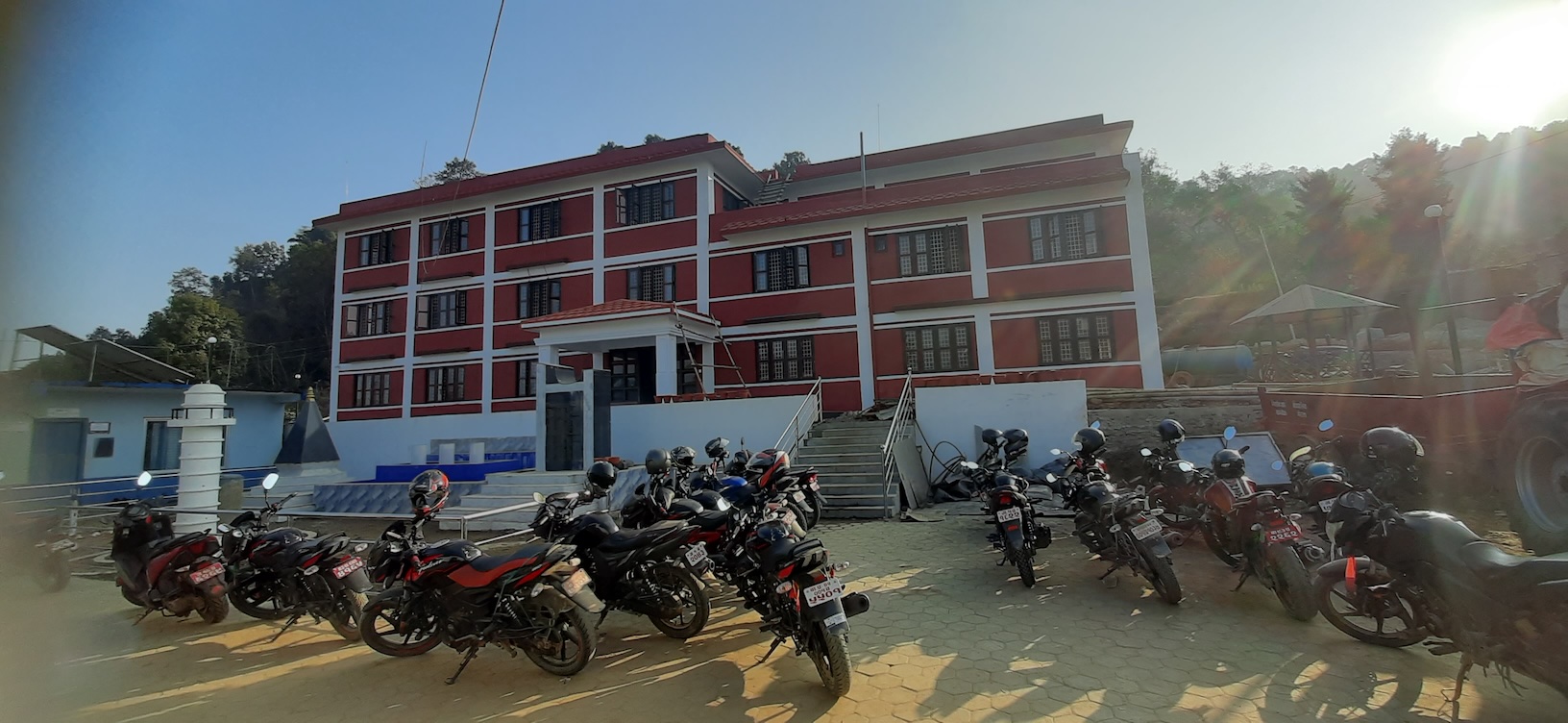
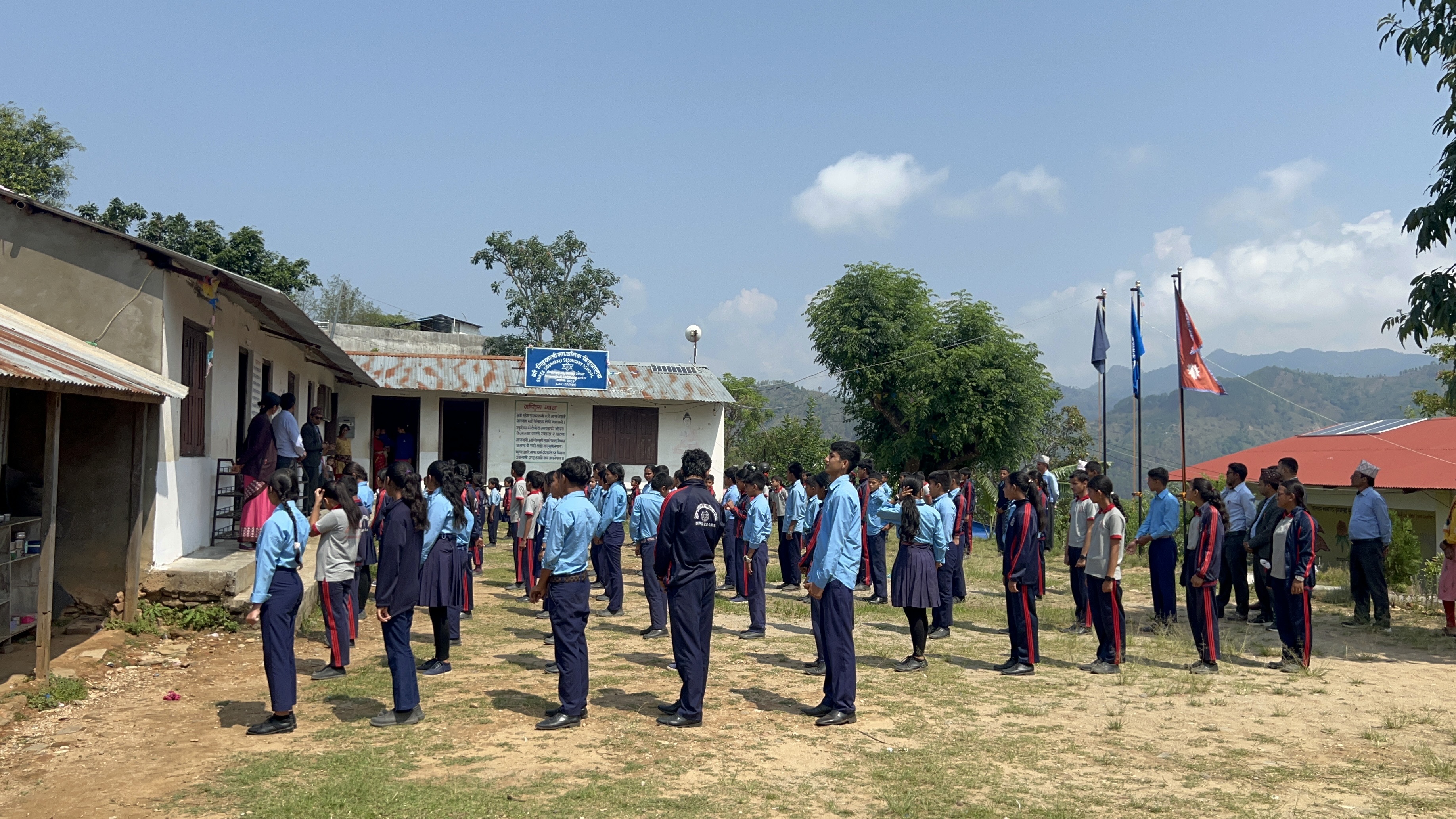
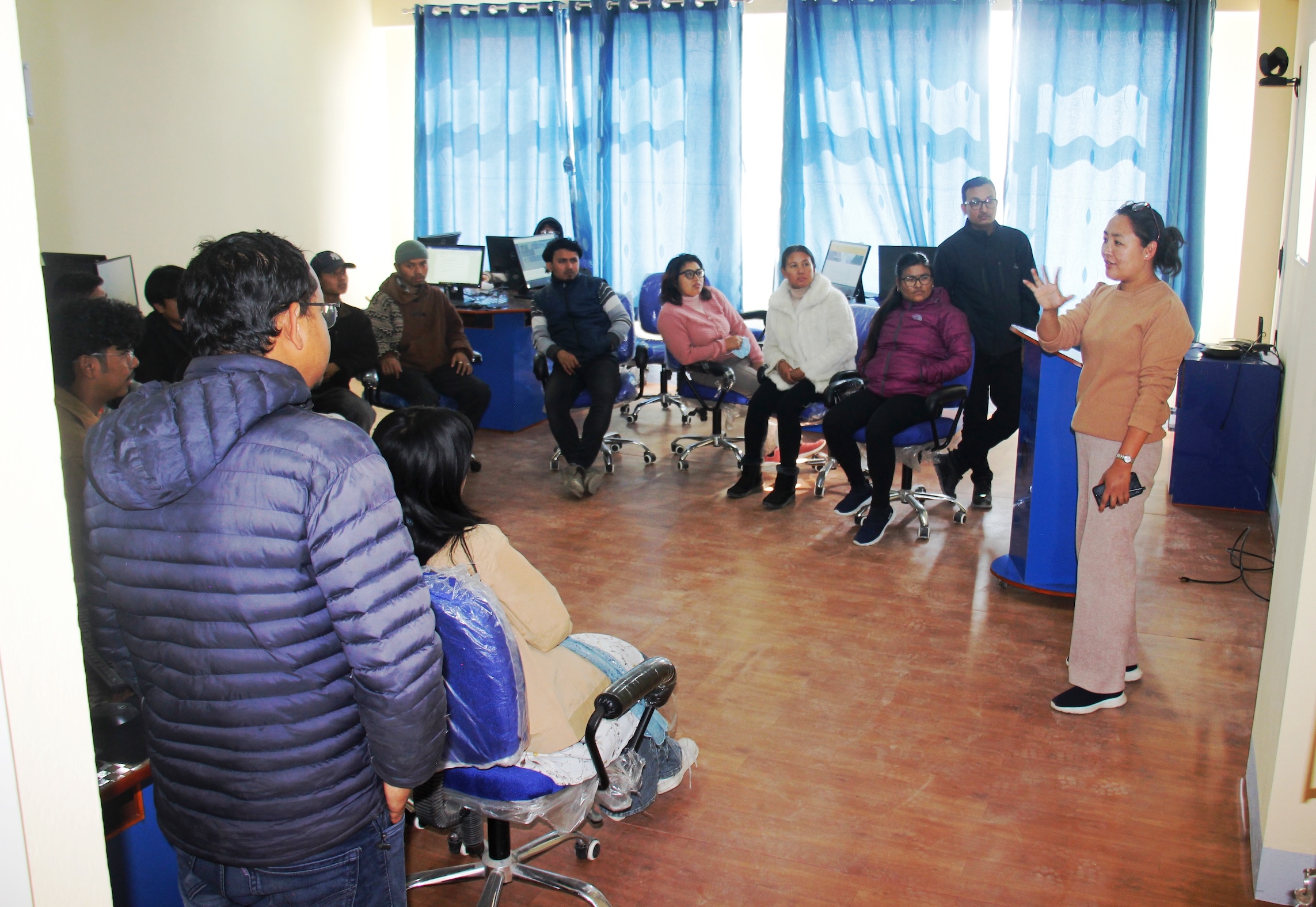
Shree Nawajagriti Chandi SecondarySchool sits in the hilly farmland of Ashrang, Ward 6 of Bhimsenthapa RuralMunicipality in Gorkha District — a community where agriculture defines dailylife and education represents one of the clearest paths toward opportunity. Theschool serves 363 students from early childhood through Grade 12, supported by29 teachers. It is a cornerstone institution for Ashrang and the surroundingvillages, offering continuous education from the earliest years all the waythrough higher secondary level.
In 2024, DB4N partnered withBhimsenthapa Rural Municipality to bring CLEC #18 to this school as part of themunicipality's second phase of CLEC expansion. The school was selectedspecifically because of its large student population — making it a high-impactsite where modern, technology-enabled learning can reach the greatest number ofstudents. The project was implemented through a co-funding model, with bothDB4N and the municipality sharing investment equally, a structure that reflectsgenuine local ownership and long-term commitment to the initiative.
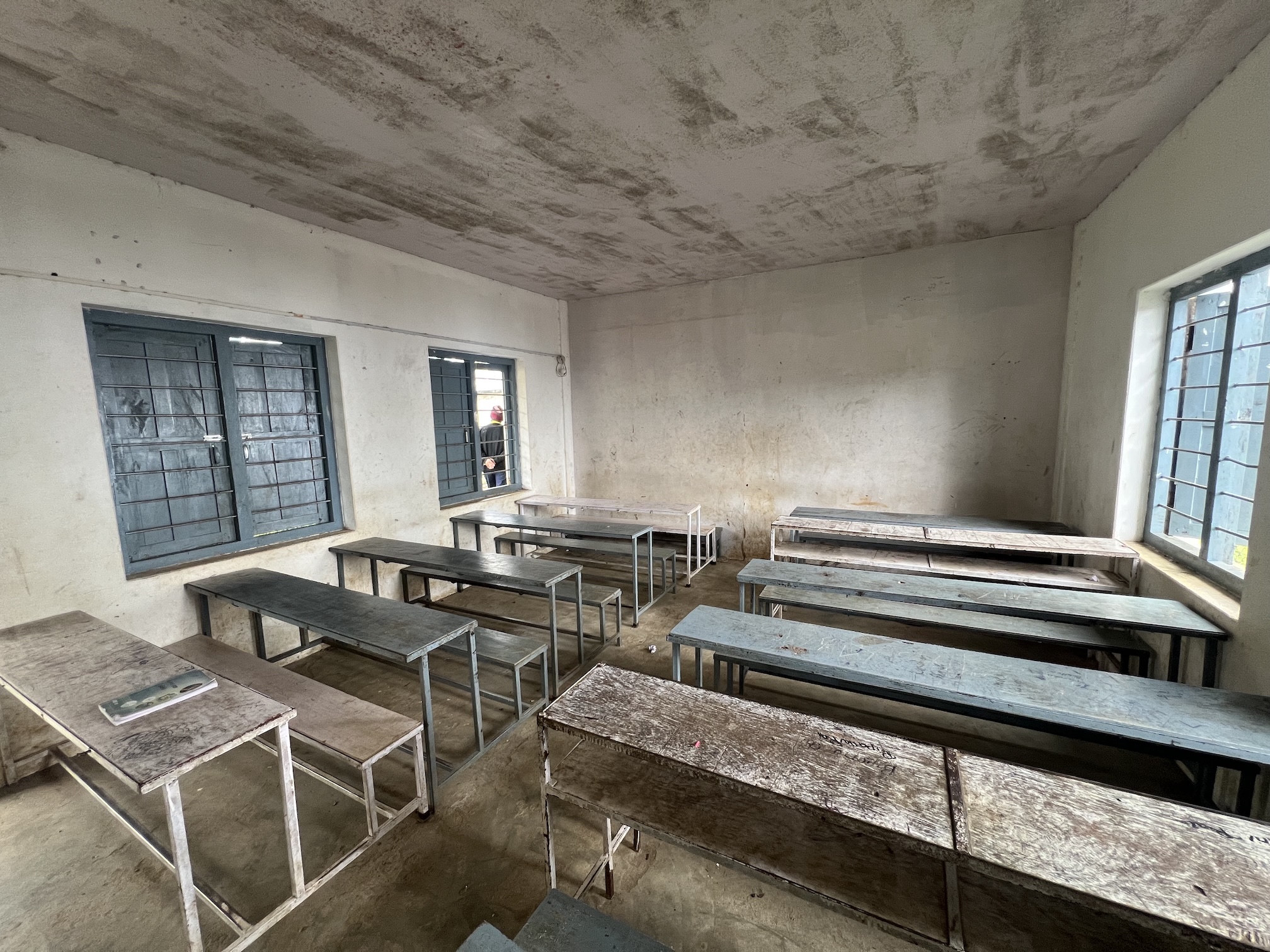
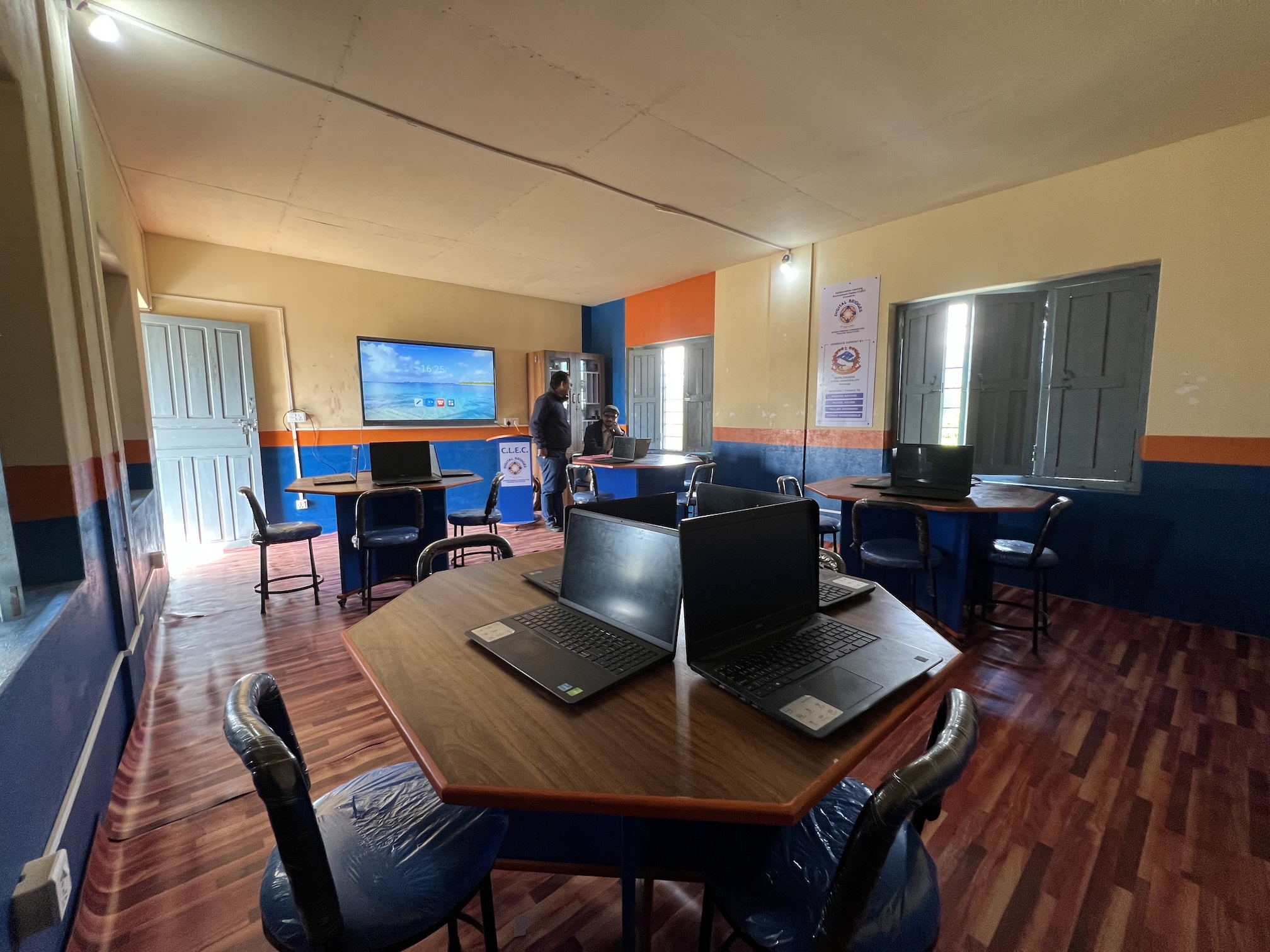
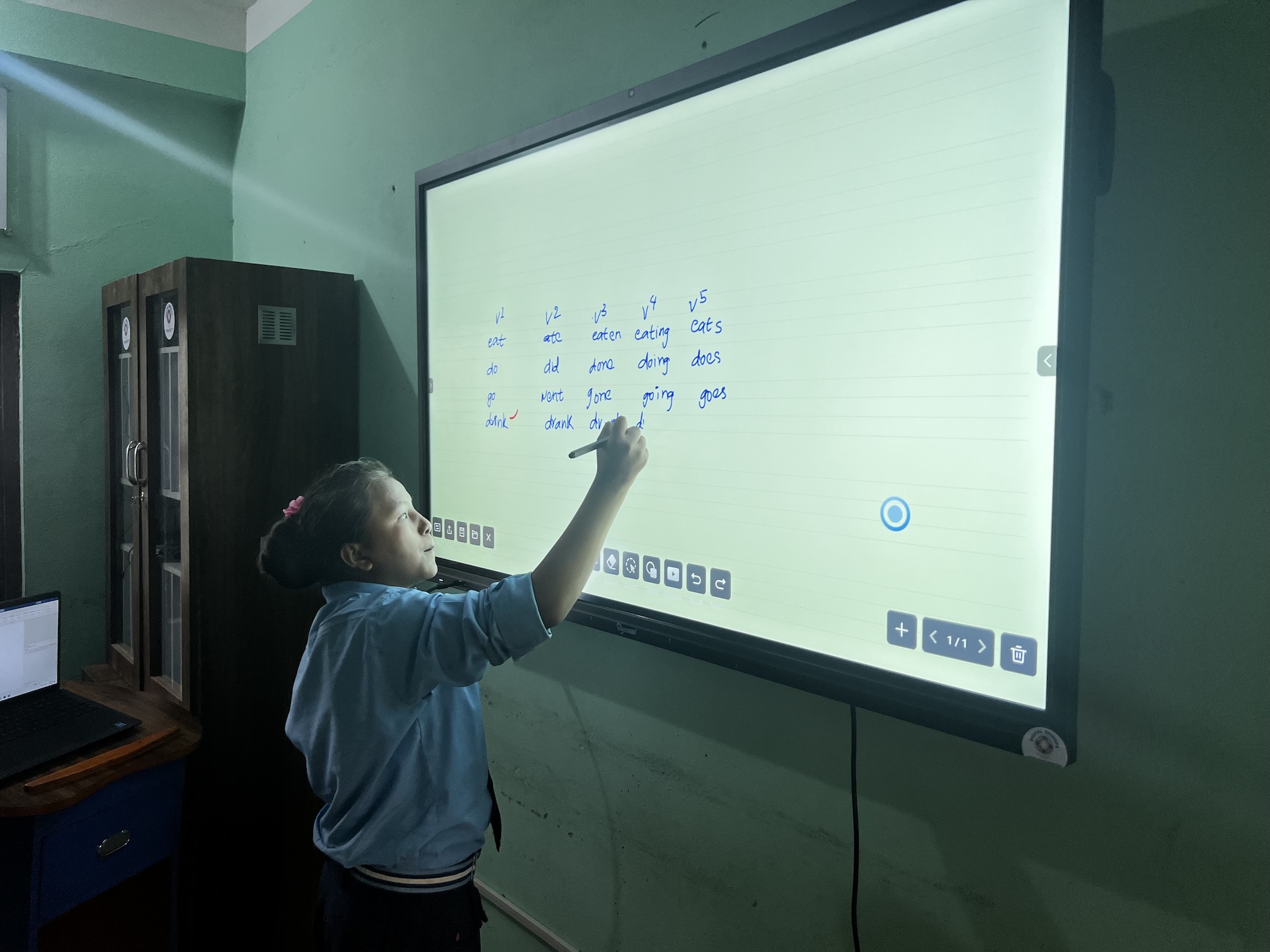
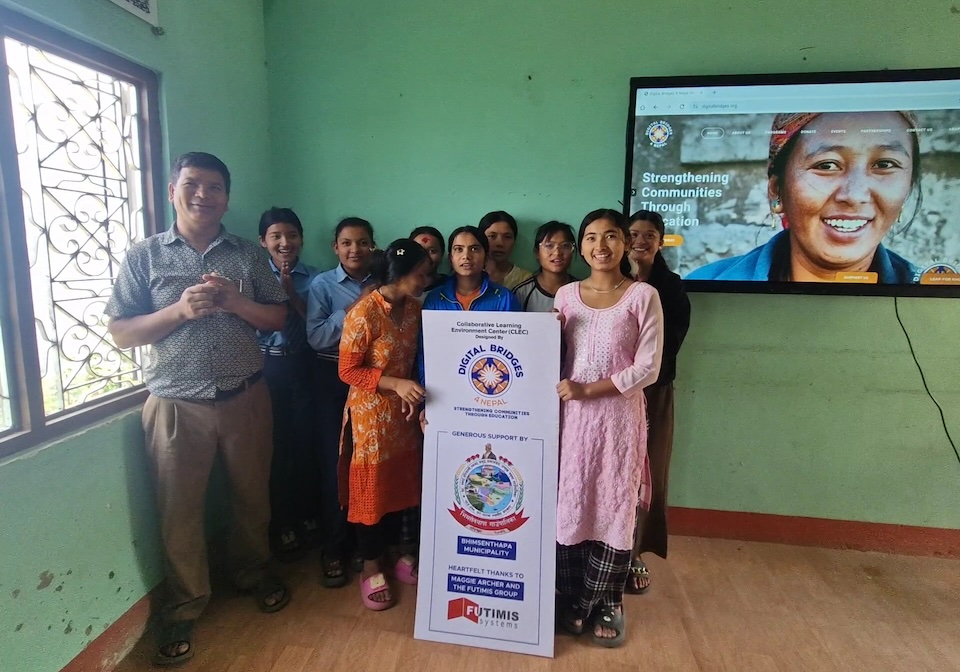
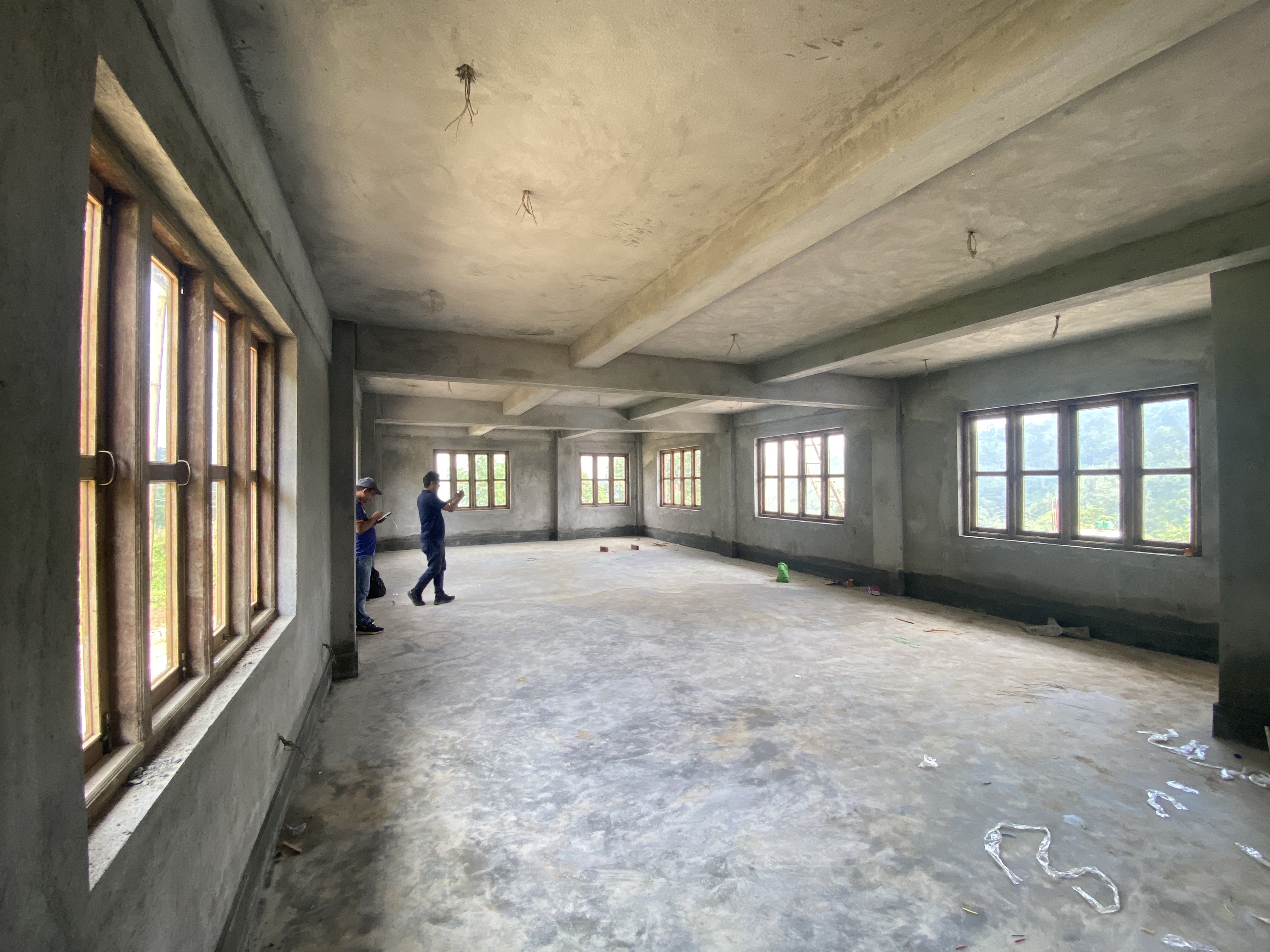
The CLEC room was built fromscratch inside an existing classroom — freshly painted, reorganized, andequipped with 12 laptops, a smart board, 4 wheeled tables, a laptop cabinet,full electrical wiring, and reliable internet connectivity. The physical setupwas designed intentionally to encourage movement, collaboration, andstudent-led inquiry rather than passive listening. Students and teachersparticipated actively in the installation process, building a sense of sharedownership from day one.
What makes Nawajagriti stand outis the enthusiasm already visible in the student body. Many students arrivedwith existing familiarity with devices and digital tools. A core group of moreadvanced students has already stepped into informal peer-teaching roles,supporting classmates who are newer to technology. Several have expressed adesire to use free periods to learn programming languages like Python — aremarkable aspiration for a rural school in Gorkha, and a signal of whatbecomes possible when access is provided.
The four CLEC focal teachers bringcomputer engineering backgrounds to the classroom — an unusual asset at thislevel. While they are newly introduced to the CLEC pedagogical methodology,their technical foundation accelerates the learning curve. Early sessions havealready revealed a meaningful shift: teachers are beginning to step back fromlecture-based delivery and toward facilitation, allowing students to driveexploration, present findings, and support each other. It is early, but theconditions for lasting change are firmly in place.


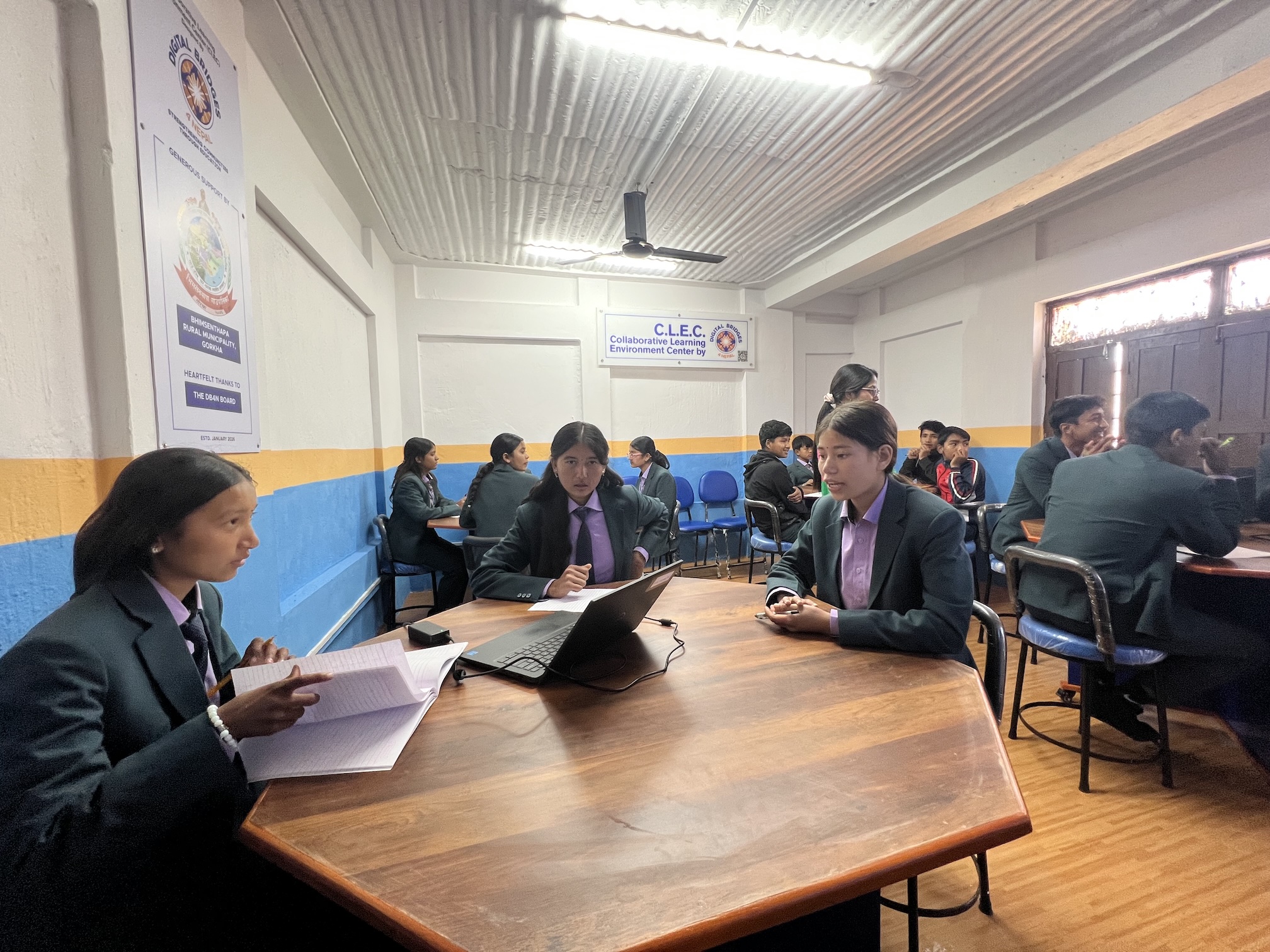
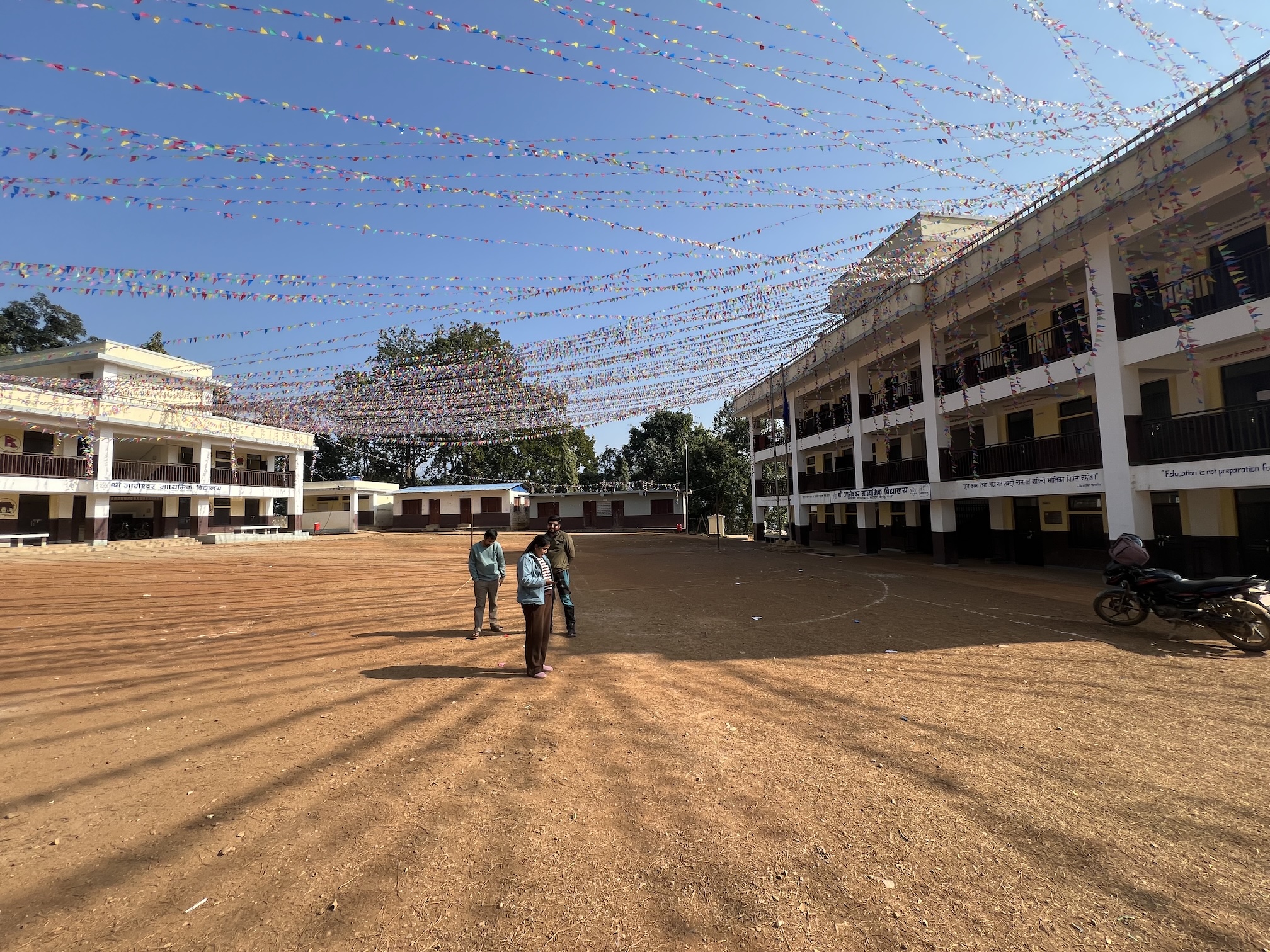
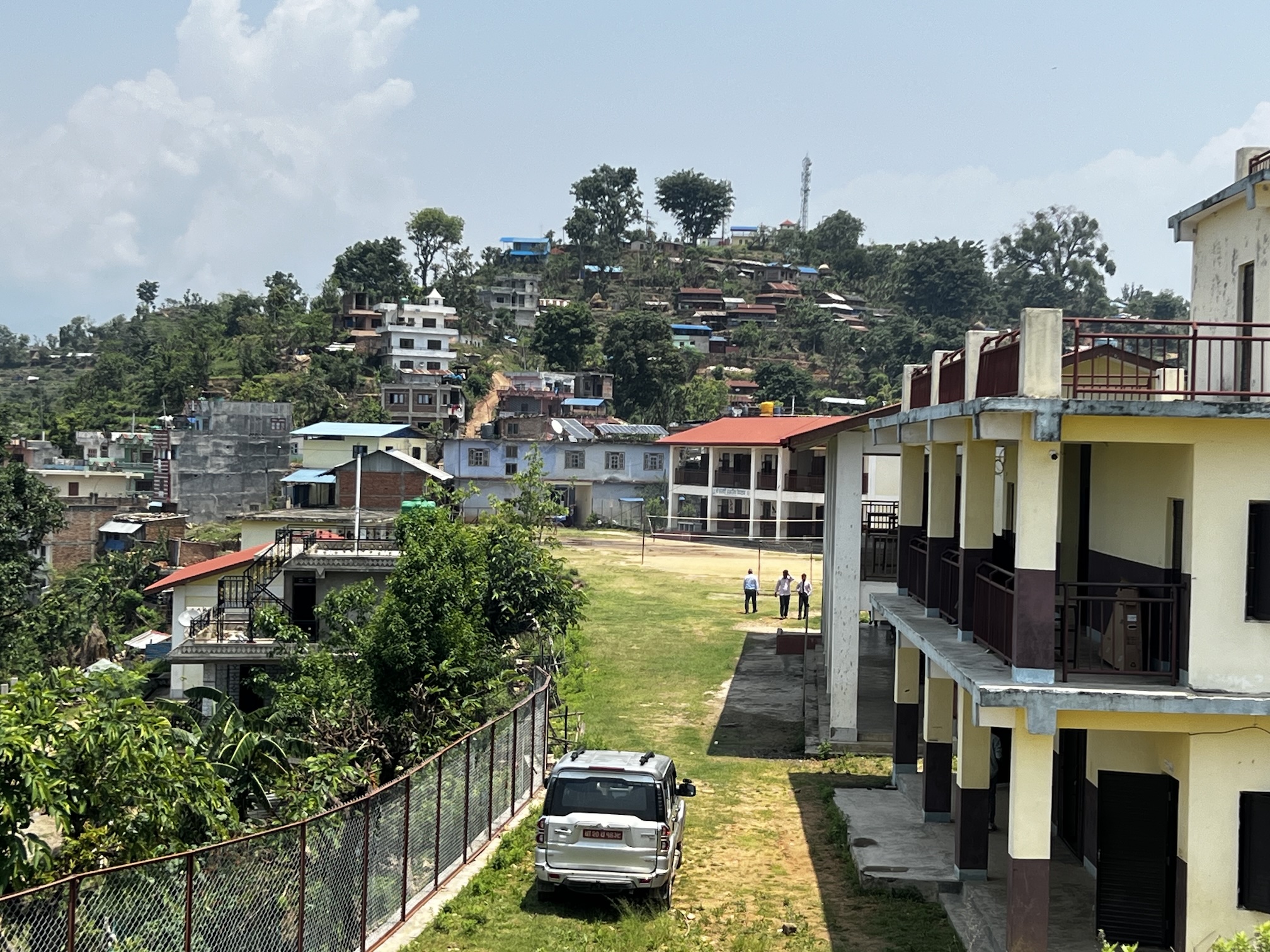
Shree Jageshwar Secondary Schoolstands in Mahadevtar, Ward 8 of Bhimsenthapa Rural Municipality in GorkhaDistrict — a community shaped by agriculture, close-knit ethnic identity, and adeep belief in education as a ladder out of hardship. The school serves 219students from early childhood through Grade 12, drawing learners from nearbywards that span both Gorkha and Dhading districts. Named after the reveredJageshwar Mahadev Temple, the school carries significant cultural meaning forthe predominantly Darai and Kumal communities it serves, and in 2026 celebratedits 50th year of continuous operation.
That milestone — five decades ofnurturing generations of rural learners — makes the arrival of CLEC #19 inFebruary 2026 all the more significant. DB4N partnered with Bhimsenthapa RuralMunicipality to bring the Collaborative Learning Environment Center toJageshwar as part of the municipality’s expanding digital education initiative,aligned with its broader “e-Village” vision. The project was implementedthrough an equal co-funding model, with the municipality and DB4N sharinginvestment and responsibility, ensuring the CLEC is genuinely owned by thecommunity it serves.
The CLEC room was built inside arenovated, freshly painted classroom — completed in just two days throughhands-on participation from both teachers and students. It is equipped with 12laptops, a smart board, 4 wheeled tables, 16 chairs, a podium, a corner shelf,full electrical wiring, and reliable internet. The layout encourages movementand collaboration rather than passive rows, designed so that a student who hasnever touched a laptop can sit beside one who has, and both leave the sessionhaving taught each other something.
That collaborative spirit isalready visible in the classroom. Many of Jageshwar’s students are first-timetechnology users, and early sessions required patience as confidence builtgradually. The onboarding process — focused on Grades 9 through 12 — prioritizedcuriosity and teamwork over rote instruction. Teachers also receivedcomprehensive hands-on training in ICT-integrated, student-centered pedagogy,shifting their role from lecturer to facilitator. The school’s principal,Yadunath Sapkota, and municipal officials including Education Section Head YanBahadur Nepali played active roles in ensuring smooth implementation andstakeholder alignment throughout.
The early results at Jageshwarreflect a school community that is ready to embrace something new. Studentengagement has increased, critical thinking and group presentation skills aredeveloping, and teachers are building genuine confidence with digital tools. Aschool that has spent 50 years passing knowledge from one generation to thenext is now equipping its students with the skills to find, evaluate, andcreate knowledge themselves. That continuity — of commitment, reimaginedthrough technology — is what makes CLEC #19 a meaningful chapter in Jageshwar’sstory.

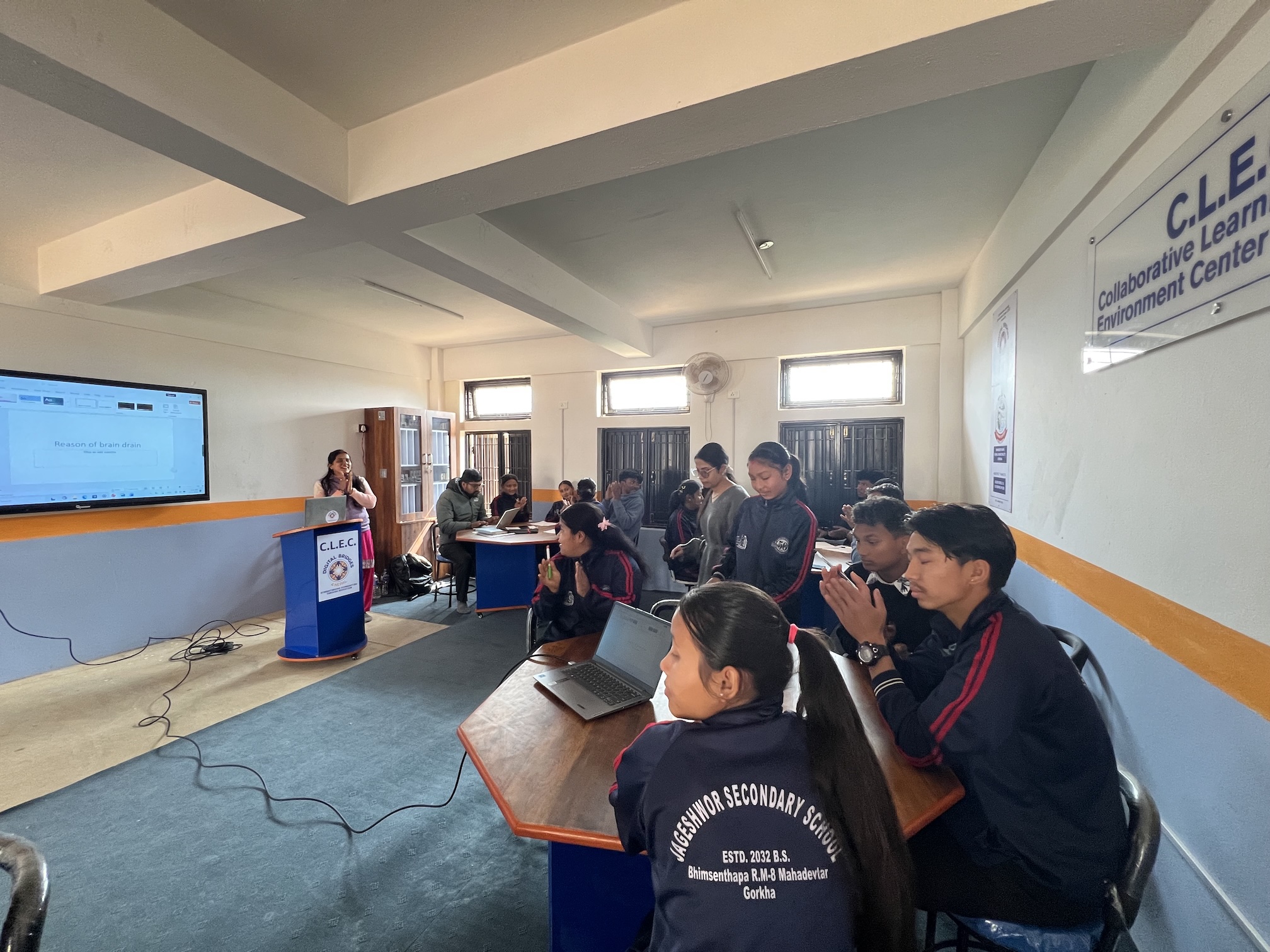


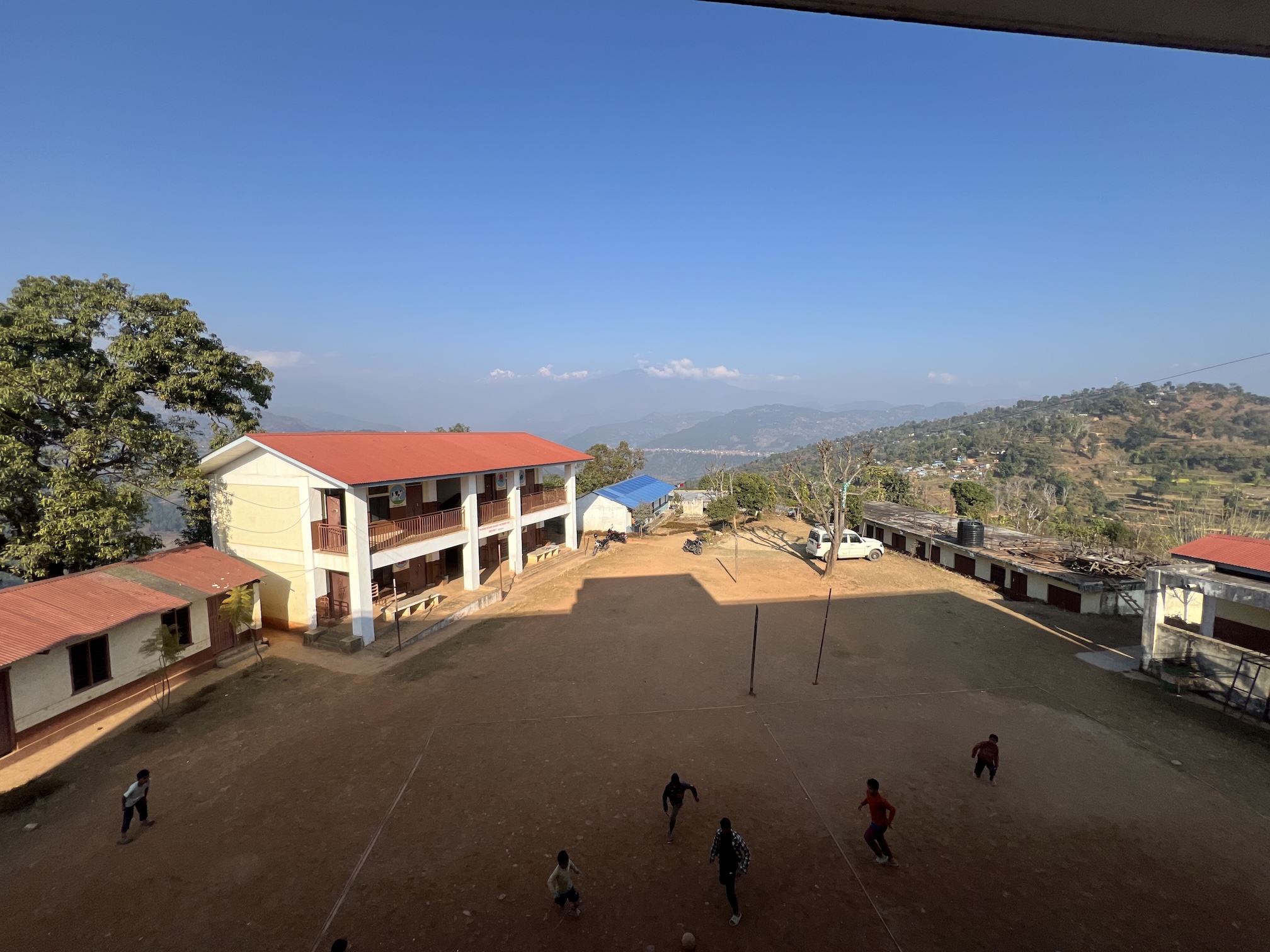
Shree Pravat Secondary School sitsin Dhawa, Ward 4 of Bhimsenthapa Rural Municipality in Gorkha District — a rural setting where agriculture defines the rhythm of daily life and where access to modern education has historically required students and families to look beyond what is immediately available. The school serves 105 students from early childhood through Grade 12, with a particular focus on preparing secondary students in Grades 9 through 12 for the digital demands of higher education, technical training, and future employment. It is a smaller school by network standards, but its size is precisely what makes each investment in learning so visible and so personal.
CLEC #17 arrived at Shree Pravatas part of DB4N’s expanding partnership with Bhimsenthapa Rural Municipality, which has been systematically building digitally enabled schools across the region under its “e-Village” initiative. What is notable about Pravat is that this is not a school waiting to be introduced to technology — it already maintained a computer lab and encouraged self-directed digital exploration despite the absence of a formal computer subject in the curriculum. The CLECdid not plant a seed here; it gave an existing drive somewhere to grow.
The CLEC room was built inside a renovated, freshly painted classroom, completed over two days with active participation from teachers and students. The space is equipped with 12laptops, a smart board, a mobile podium, a laptop storage cabinet with charging ports, 4 tables, 16 chairs, full electrical wiring, and reliable internet connectivity. The layout encourages group work, peer discussion, and student-led exploration — a deliberate shift away from the rows-and-lecture format that still dominates most rural classrooms in Nepal.
During onboarding, teachers received structured training in ICT-integrated, collaborative pedagogy — for several, this was their first formal exposure to student-centered teaching methodology. A full demonstration class was conducted, walking through a completeCLEC session: group activities, laptop use, smart board presentations, and interactive learning exercises. The principal reflected publicly on the school’s journey from blackboards to smart boards, framing the CLEC not as an outside intervention but as the next chapter in a story the school has been writing for years.
Early results reflect a community that was primed and ready. Student engagement is up, confidence with technology is growing, and teachers are beginning to integrate collaborative methods into their regular classroom practice. For a school of 105 students in a rural ward of Gorkha, the CLEC represents more than equipment — it represents are calibration of what learning can look and feel like, and a signal to students that their curiosity, including one student’s dream of becoming a professional game streamer, belongs in a classroom.
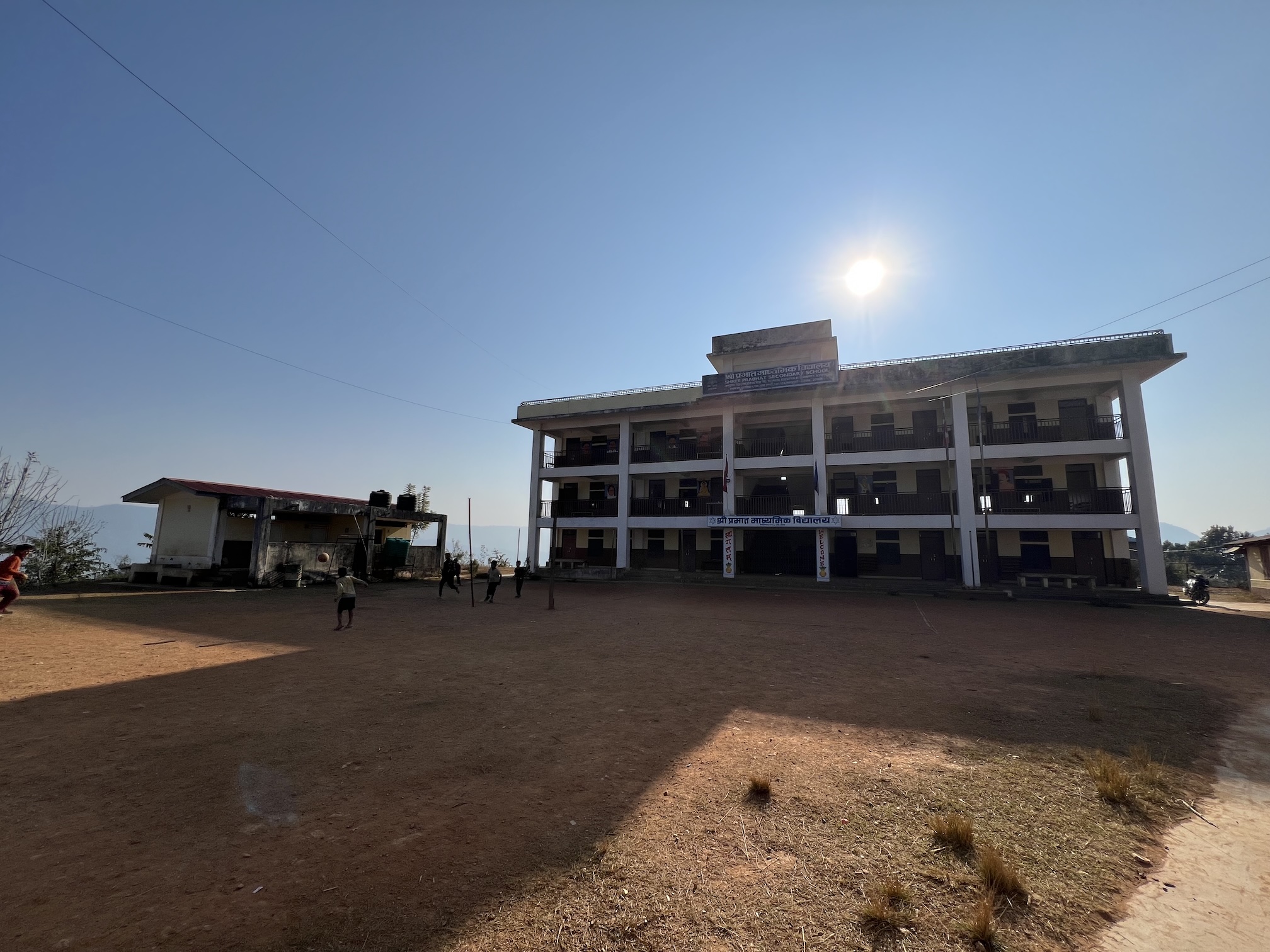
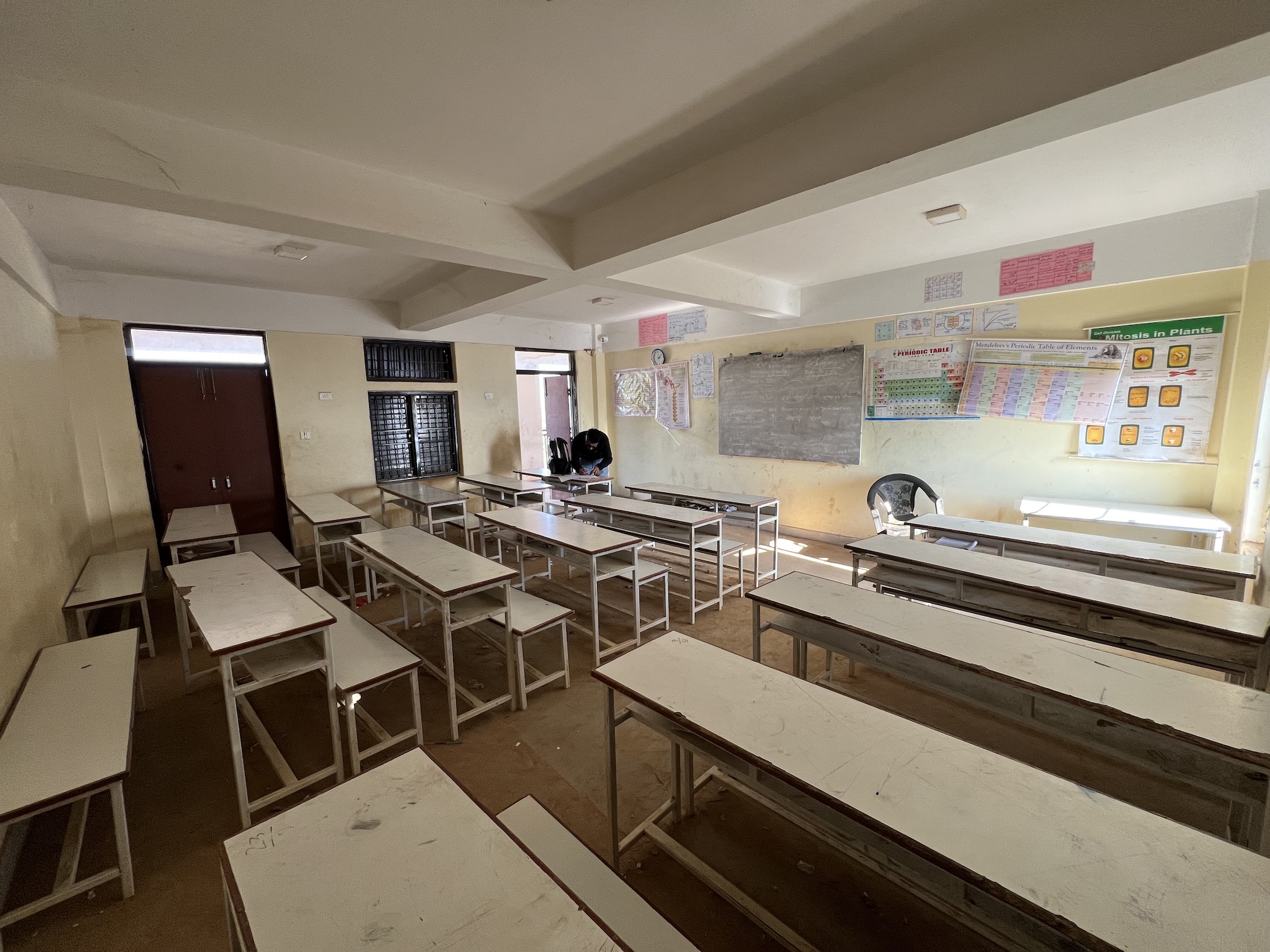

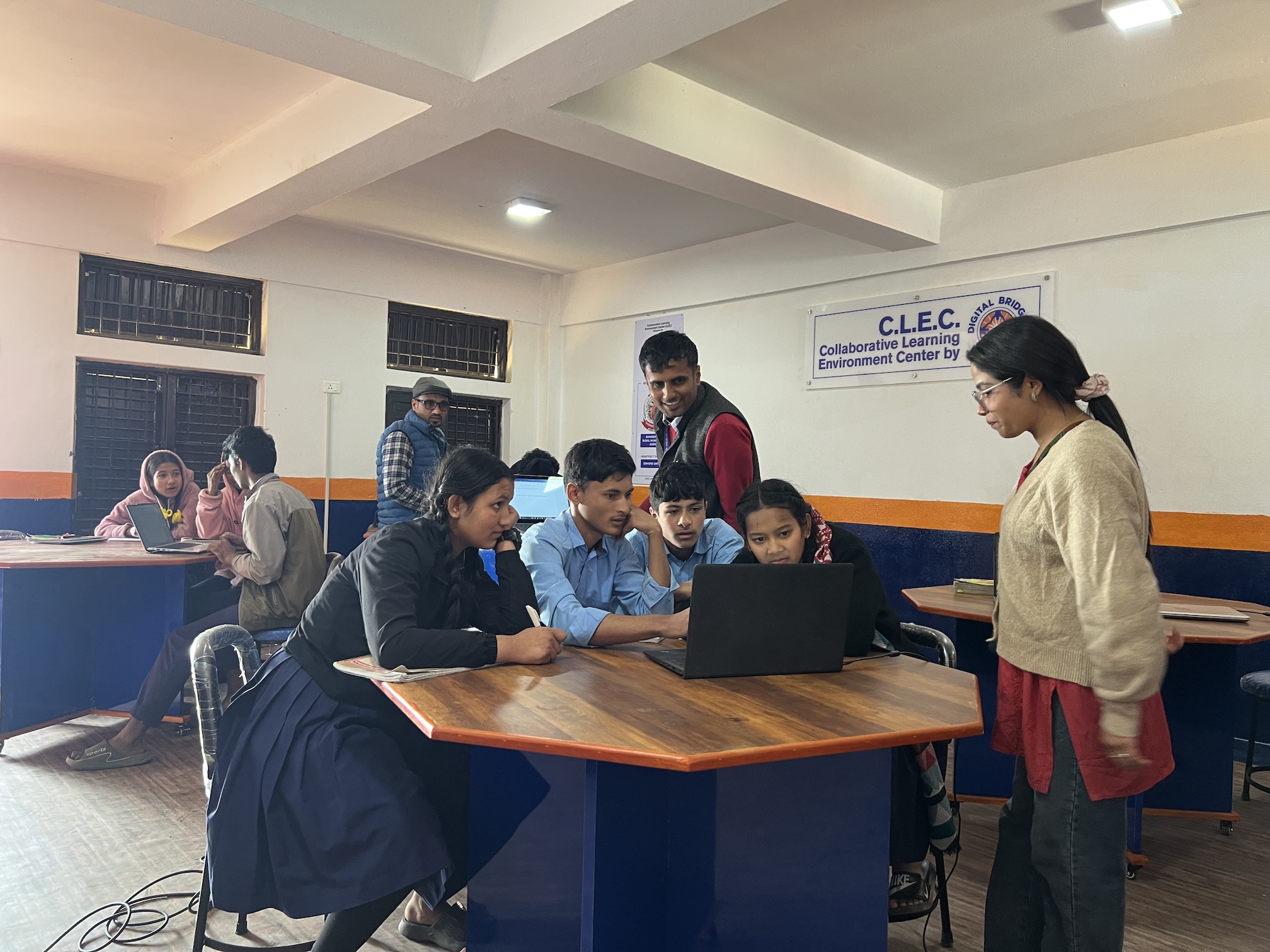
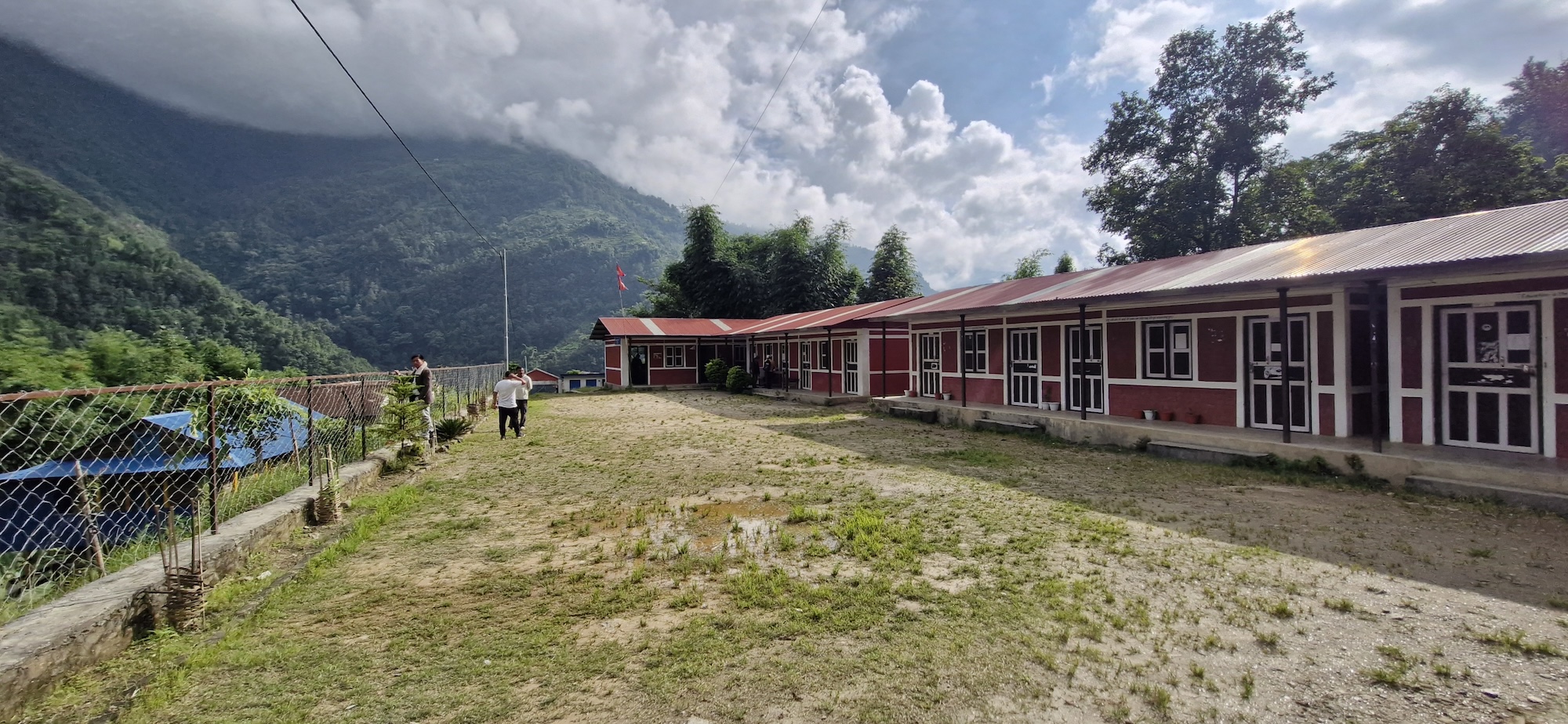
Shree Sanskrit Secondary Schooloccupies a hilltop in Majhinthok, Ward 3 of Bhimsen Thapa Rural Municipality inGorkha District — perched at 895 meters above sea level, roughly 700 meterswest of the Mid-Hill Highway. The school serves 129 students from earlychildhood through Grade 12, drawing from a richly diverse community thatincludes Brahmin, Chhetri, Dalit, Janajati, Baram, Bhujel, and Kumalhouseholds. Agriculture defines local livelihoods, but education is held ingenuine high regard. Girls make up the majority of the student body at 52.7% —a meaningful demographic for a rural mountain school — though enrollment inGrades 11 and 12 remains comparatively thin, signaling a critical transitionpoint where continued investment matters most.
CLEC #16 arrived at Shree Sanskritas part of DB4N’s partnership with Bhimsen Thapa Rural Municipality,implemented through an equal co-funding model that reflects genuine sharedownership between the organization and local government. The municipality’sinvestment is not incidental — it is part of a broader “e-Village” strategy tobuild digitally enabled communities across the region, connecting rural youthto modern learning resources and equipping them for a world increasingly shapedby technology.
The CLEC room was built inside arenovated, freshly painted classroom — reorganized to foster movement,collaboration, and student-led inquiry. It is equipped with 12 laptops, a SmartTV, a podium, a corner shelf, 4 wheeled tables, 16 chairs, full electricalwiring, and reliable internet connectivity. For many of Shree Sanskrit’sstudents, the laptops in this room represent their first sustained access to adigital device. The classroom layout is designed with that reality in mind: nostudent sits isolated, every station encourages conversation, and thetechnology is a tool for doing together rather than consuming alone.
Onboarding sessions introducedboth teachers and students to the CLEC methodology — structured training instudent-centered pedagogy, collaborative learning design, and ICT integration.Teachers learned how to step back from lecture delivery and into facilitation.Students were guided through group research tasks, presentations, andproject-based learning activities. Early sessions surfaced the usualchallenges: initial shyness, uneven digital familiarity, and the occasionalinternet outage. These are manageable hurdles, and the community’s response toeach has been consistent — peer support, hands-on practice, and a classroomculture that rewards curiosity over correctness.
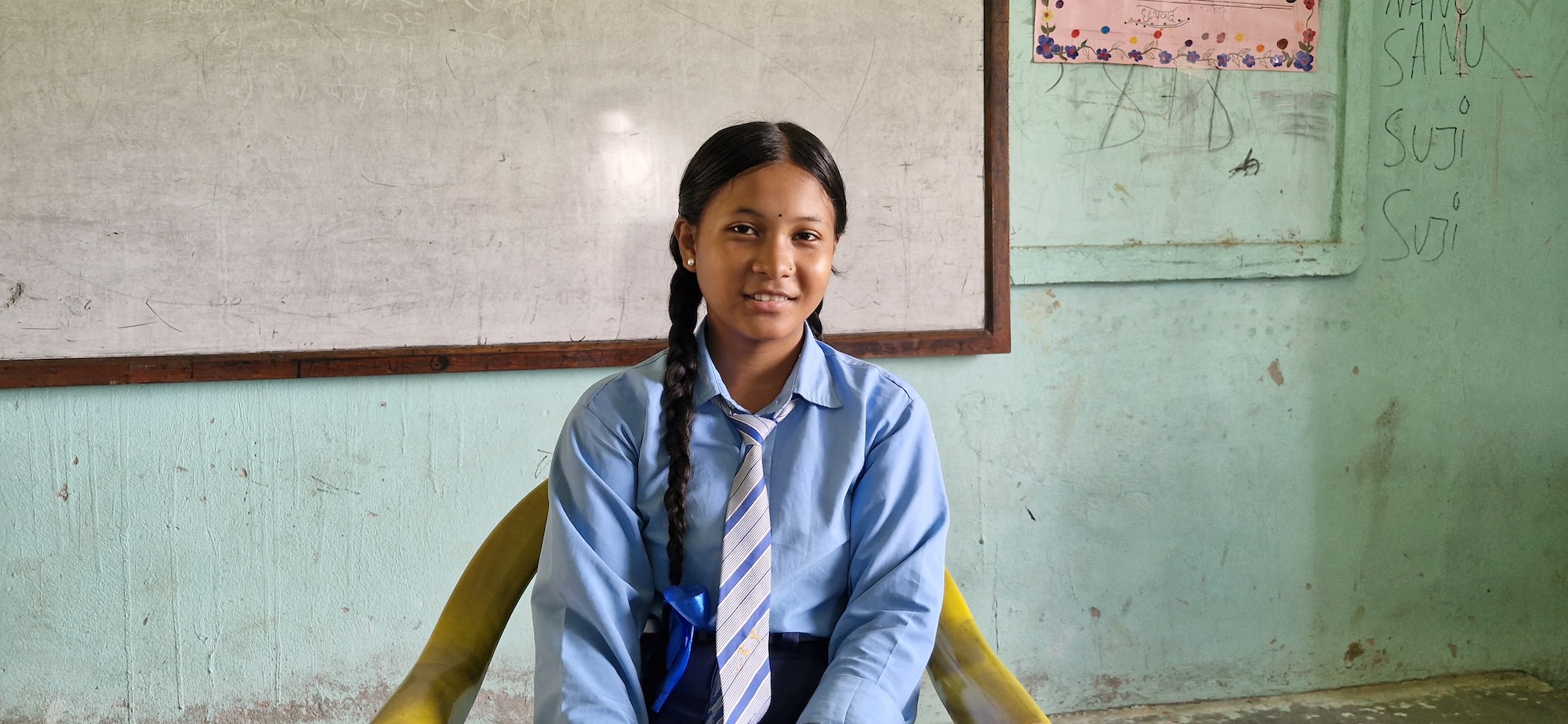
The early indicators at ShreeSanskrit are encouraging. Students are engaging more actively in classroomactivities, asking questions, and beginning to see themselves as capable ofexploring information independently rather than receiving it passively. Teachersare integrating CLEC tools into their regular practice. And one student, SakinBK, has already articulated something that takes many adults years tounderstand: that learning how to support others is part of learning itself. Fora school in a mountain ward of Gorkha, that shift in classroom culture is ameaningful result.
.jpg)
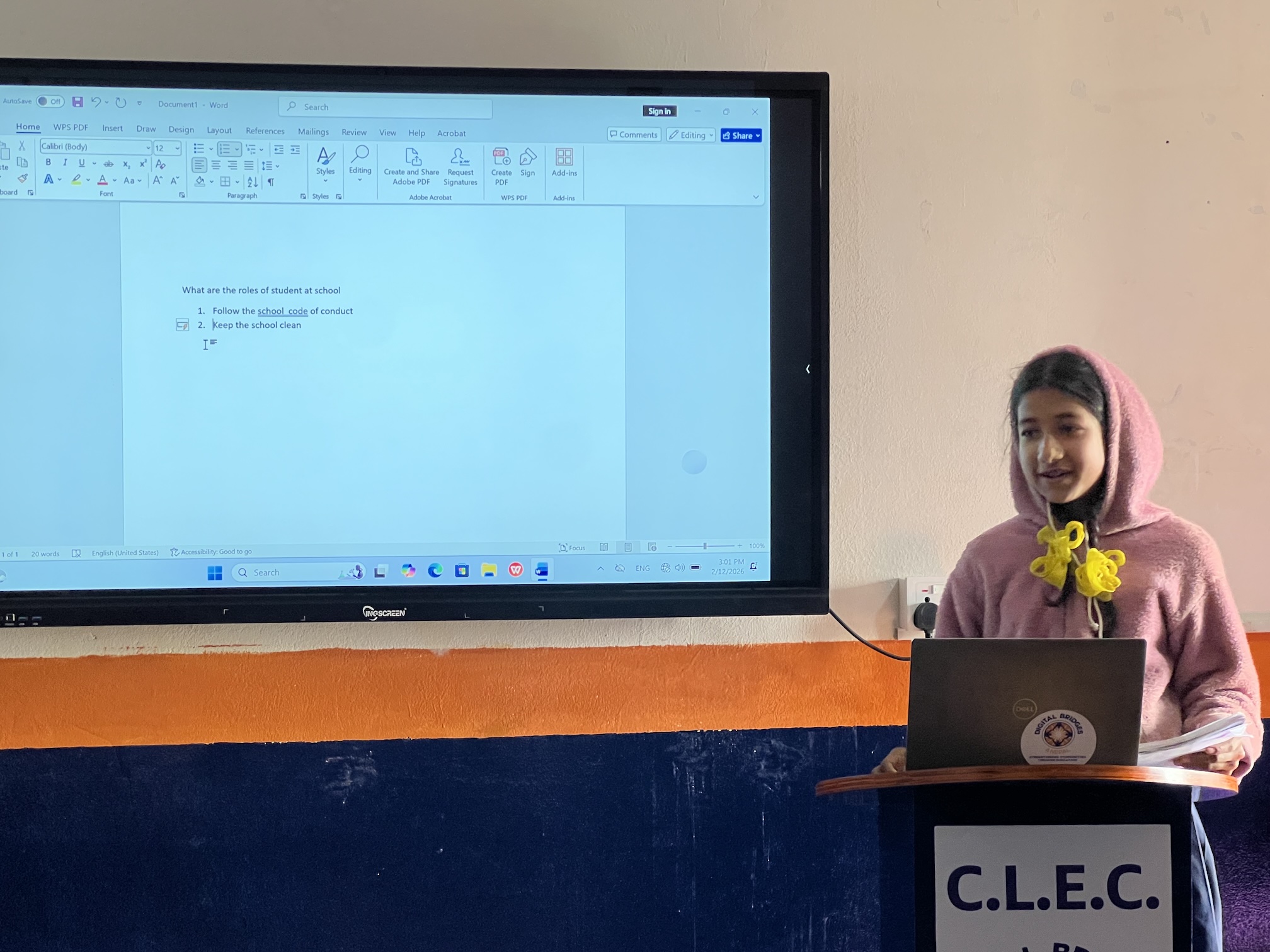
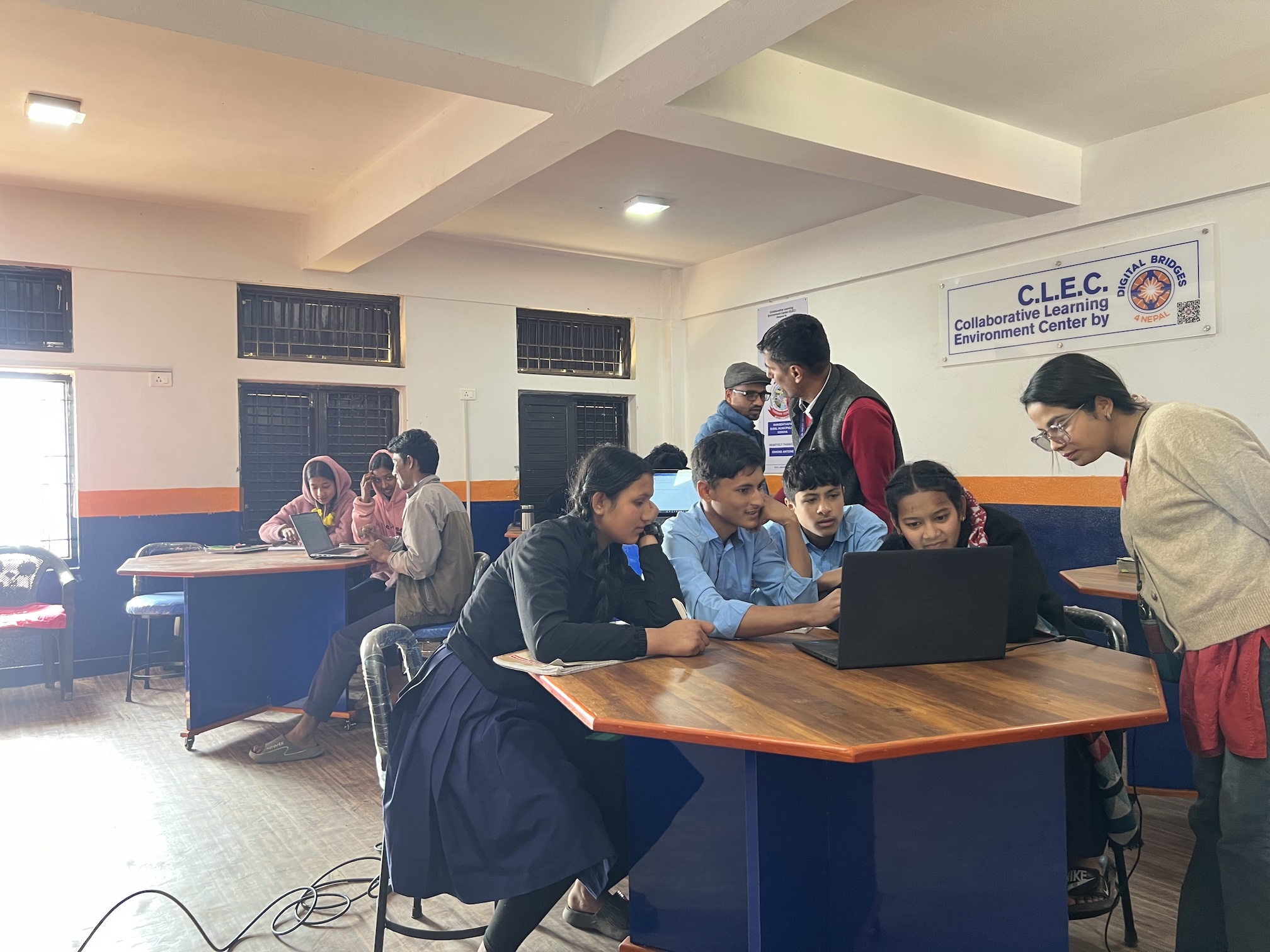

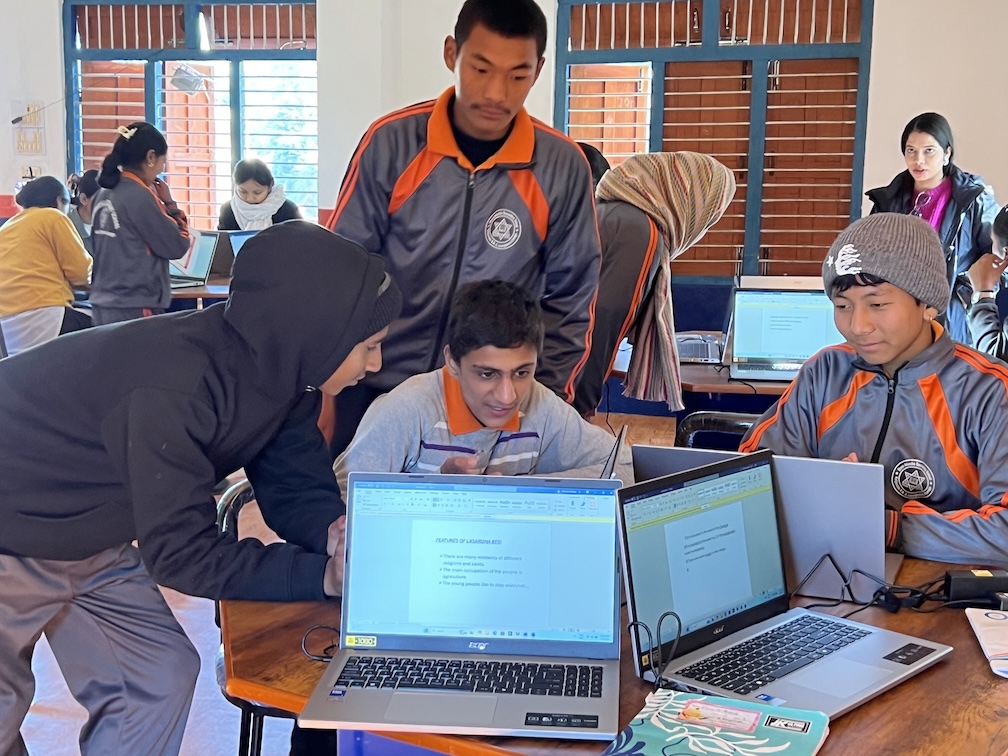
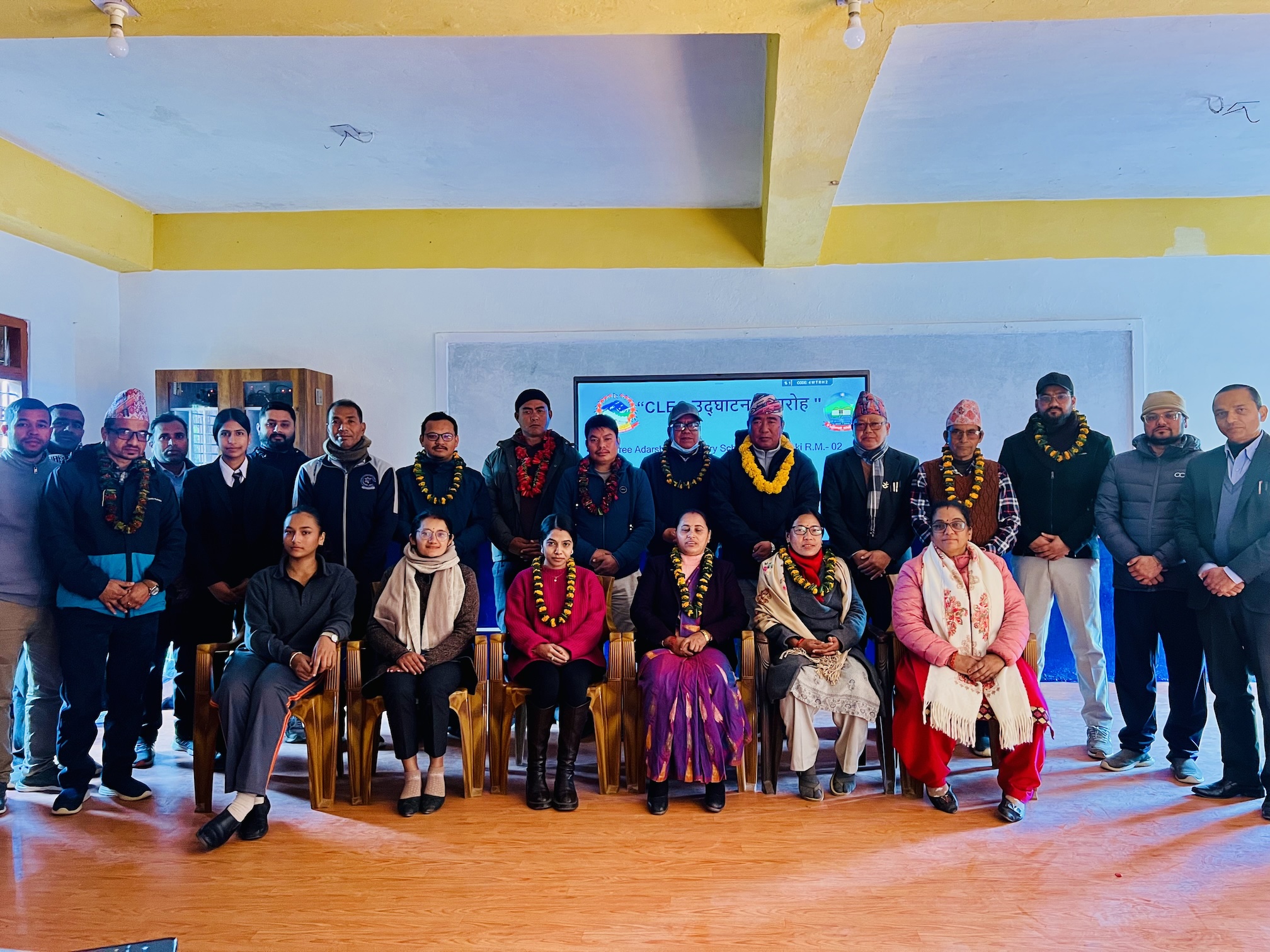
Shree Adarsha Secondary School, in Kaligandaki Rural Municipality, Ward No. 2, Lasargabasi, Syangja District, Gandaki Province, is DB4N's first installation in Syangja District. The school provides secondary education from Grades 6–12 and serves as the primary education hub for students transitioning from two nearby primary schools. Current enrollment is 175 students.
The CLEC was established through close coordination with Kaligandaki Rural Municipality, Chairperson Khim Bahadur Thapa, and Vice-Chairperson Sabitra Koirala. Multiple virtual and in-person meetings focused on long-term sustainability, co-funding mechanisms, and integration of the CLEC into regular teaching - ensuring this was treated as a permanent part of the school's educational model, not a standalone project.
The classroom is equipped with four octagonal collaborative tables, 16 student laptops, 1 teacher laptop, a teacher's podium, a Smart Board, a secure laptop cabinet, and carpet flooring. Electrical systems were upgraded for reliable, safe digital use throughout the school day.
The municipality's Education Department was engaged throughout implementation, with discussions on teacher engagement, curriculum integration, and alignment with municipal education priorities - a model of government partnership that goes beyond infrastructure to embed the CLEC into institutional practice.


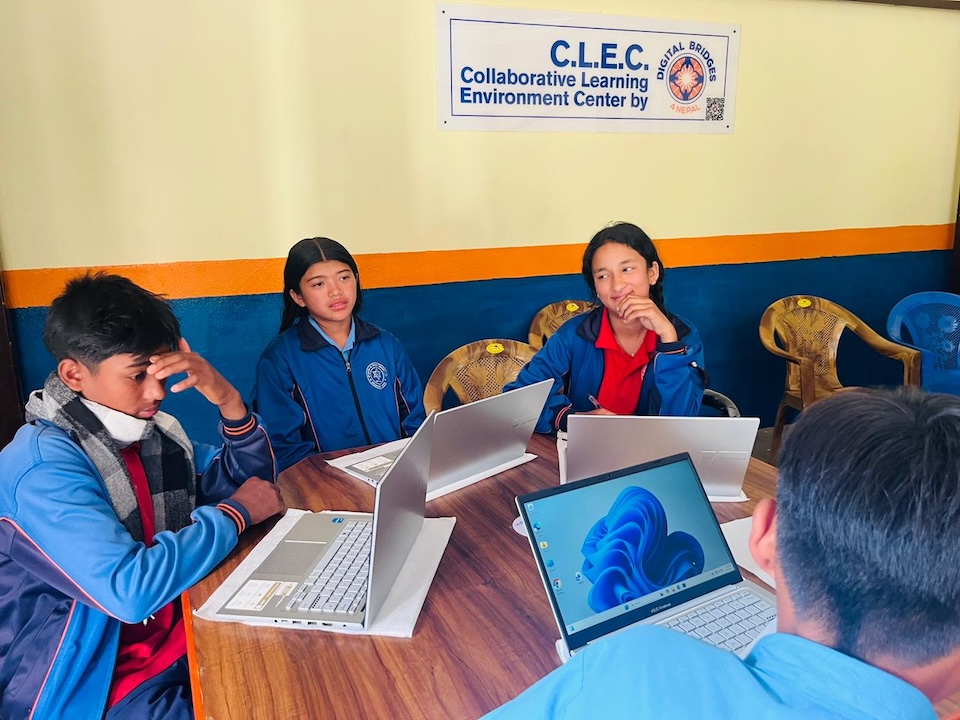
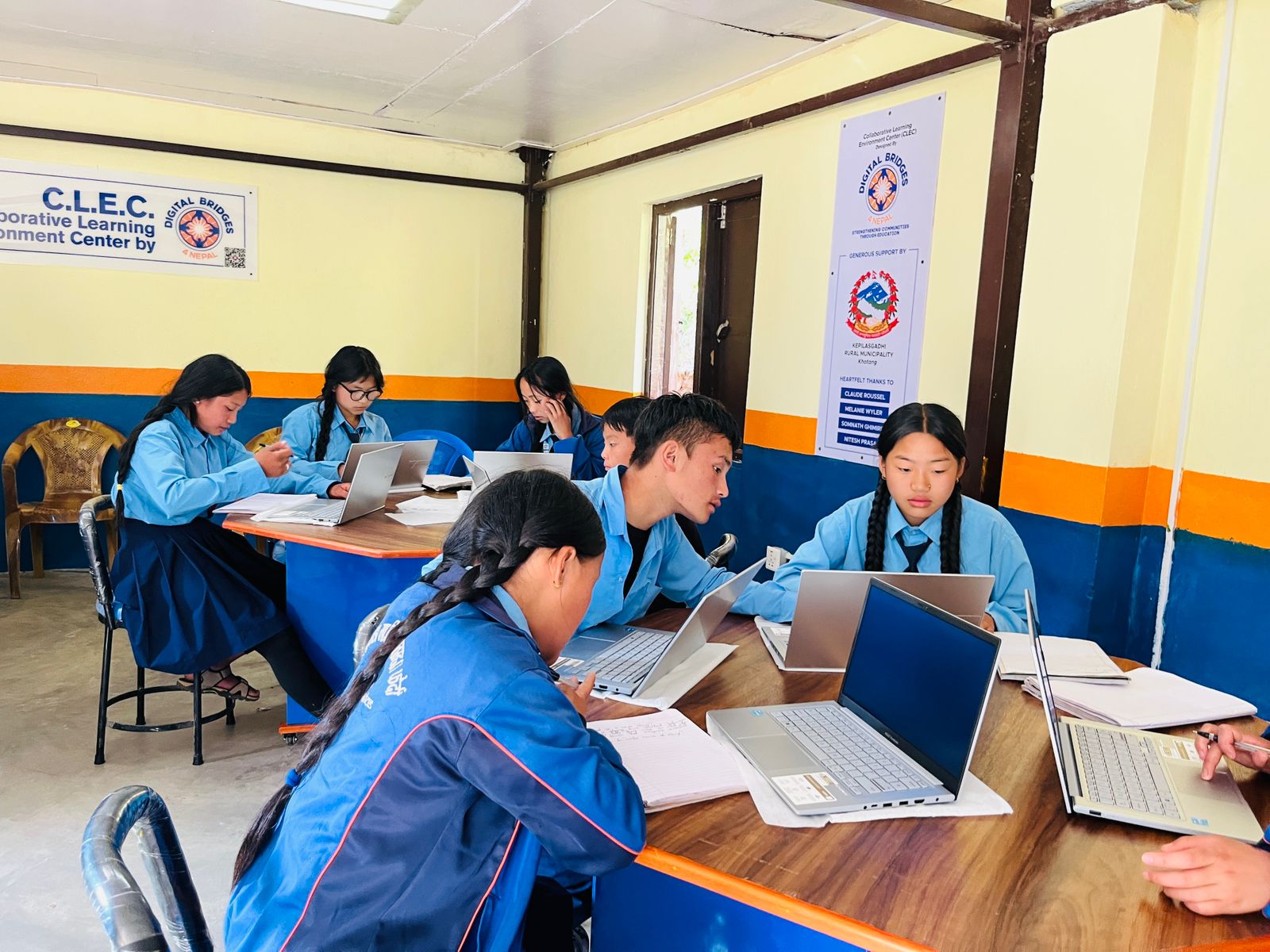
Shree Kuhudanda Ma Vi, in Kepilasgadhi Rural Municipality, Ward No. 1, Phadi, Khotang, is one of the smallest schools in the DB4N network - 90 students, 49 girls and 41 boys. Size does not determine impact.
The CLEC was established November 6, 2025, as part of a coordinated expansion in Khotang alongside Shree Prithvi Ma Vi. Both schools benefited from the same municipal partnership framework: formal coordination meetings with all senior officials, shared MoU processes, and municipal provision of laptops and digital equipment.
The classroom was equipped with octagonal collaborative tables, a teacher's podium, a laptop storage cabinet, carpet, and upgraded electrical wiring. The Kepilasgadhi Rural Municipality provided laptops and essential equipment, ensuring full operational readiness from day one.
Teacher and student onboarding introduced the Shine Methodology, collaborative learning approaches, and the CLEC Code of Conduct. The DB4N team also conducted student and teacher surveys and Focus Group Discussions - capturing baseline data that will measure long-term impact. Municipal officials who attended the demonstration praised the layout and committed to expanding the model to additional schools.


Shree Prithvi Ma Vi in Kepilasgadhi Rural Municipality, Ward No. 4, Baksila, Khotang, represents DB4N's expansion into a new district and a new model of government partnership. The school serves 453 students in total, with 184 students from Grades 8–12 (94 girls, 90 boys) directly benefiting from the CLEC.
The local government's involvement was exceptional from the start. DB4N conducted formal coordination meetings with the Mayor, Vice Mayor, Chief Administrative Officer, Education Officer, Accountant, and Storekeeper - resulting in a Triparty Memorandum of Understanding among DB4N, the Rural Municipality, and the school. A five-year Monitoring and Support Committee was established, ensuring sustainability beyond the initial installation.
The municipality provided 16 laptops for the CLEC - equipping the room fully without additional donor funding. Octagonal collaborative tables, a teacher's podium, a laptop storage cabinet, carpet flooring, and upgraded electrical systems were installed.
The inauguration included a live demonstration for all senior municipal officials, who praised the classroom layout and committed to expanding the model to additional schools. The CAO emphasized the urgency of moving rural schools away from memorization-based teaching toward technology-enabled, student-centered learning.


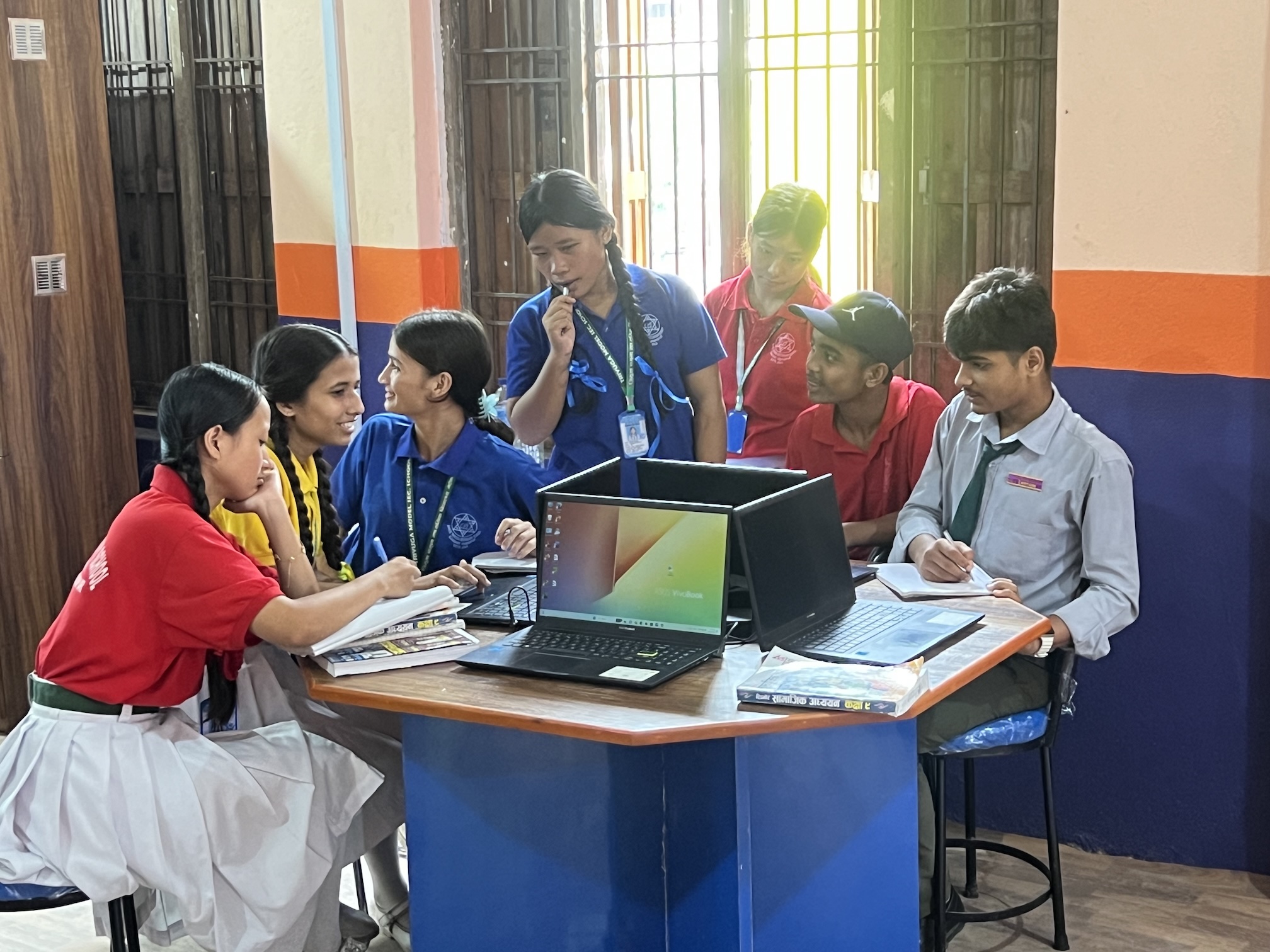
Triyuga Municipality is the largest in Koshi Province and the third largest in Nepal - and its Mayor has a bold vision: to make Triyuga the "Silicon Valley of Nepal," a regional hub for innovation, collaborative teaching, and entrepreneurship. The CLEC at Shree Triyuga Secondary School is the foundation of that vision.
The school enrolls 1,253 students across Grades 9–12 - 636 male and 617 female - making it the largest site in the DB4N network. The 65-square-meter CLEC room is equipped with four octagonal collaborative tables, 16 laptops per session, a Smart Board, a teacher's podium, carpet flooring, and high-speed broadband (200 Mbps). Security measures include CCTV cameras, lockable doors, and a backup generator. With 16 students per session rotating through, every student has equitable access.
The municipality demonstrated exceptional ownership by committing to co-fund 49.93% of the total project cost - the highest municipal co-investment in DB4N's history. DB4N Board Member Somnath Ghimire led the relationship with the Mayor's office and the MoU process.
Installation took place September 6–9, 2025, during a nationwide protest that temporarily disrupted municipal operations. The team adapted and completed on schedule - a testament to the strength of local coordination and DB4N's field resilience.



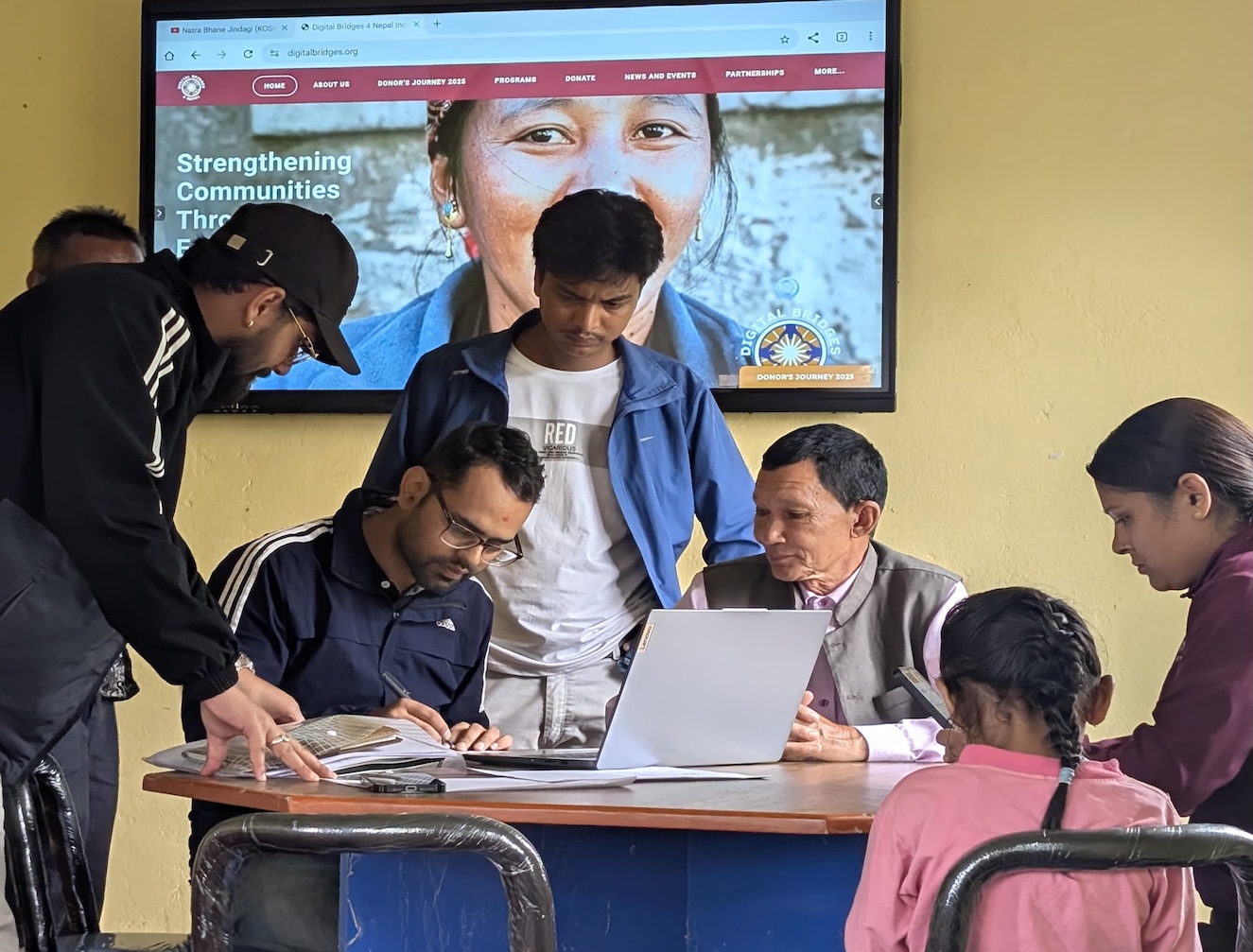
The Mini / Ward CLECs in Bhimsenthapa Rural Municipality represent a new chapter in the CLEC model -one that moves beyond school walls and into the heart of community governance. Launched as a pilot under the vision of Municipality Chairperson Lok Prasad Banjara, the initiative establishes a Collaborative Learning Environment Center in Ward No. 5 (Baguwa) and two in Ward No. 2 (Tandrang), realizing a municipality-wide “eVillage” concept where every ward becomes a node of digital connectivity and civic participation.
Each Mini CLEC is housed within its ward office and equipped with a 65-inch SMART Board, a laptop, an octagonal table, and seating for eight -designed for both virtual municipal meetings and in-person community workshops. Ward 5 (Baguwa) serves 1,346 residents; Ward 2 (Tandrang) serves 1,520. Together, these two wards are now connected to the broader BTRM digital network without residents needing to travel to the municipal center.
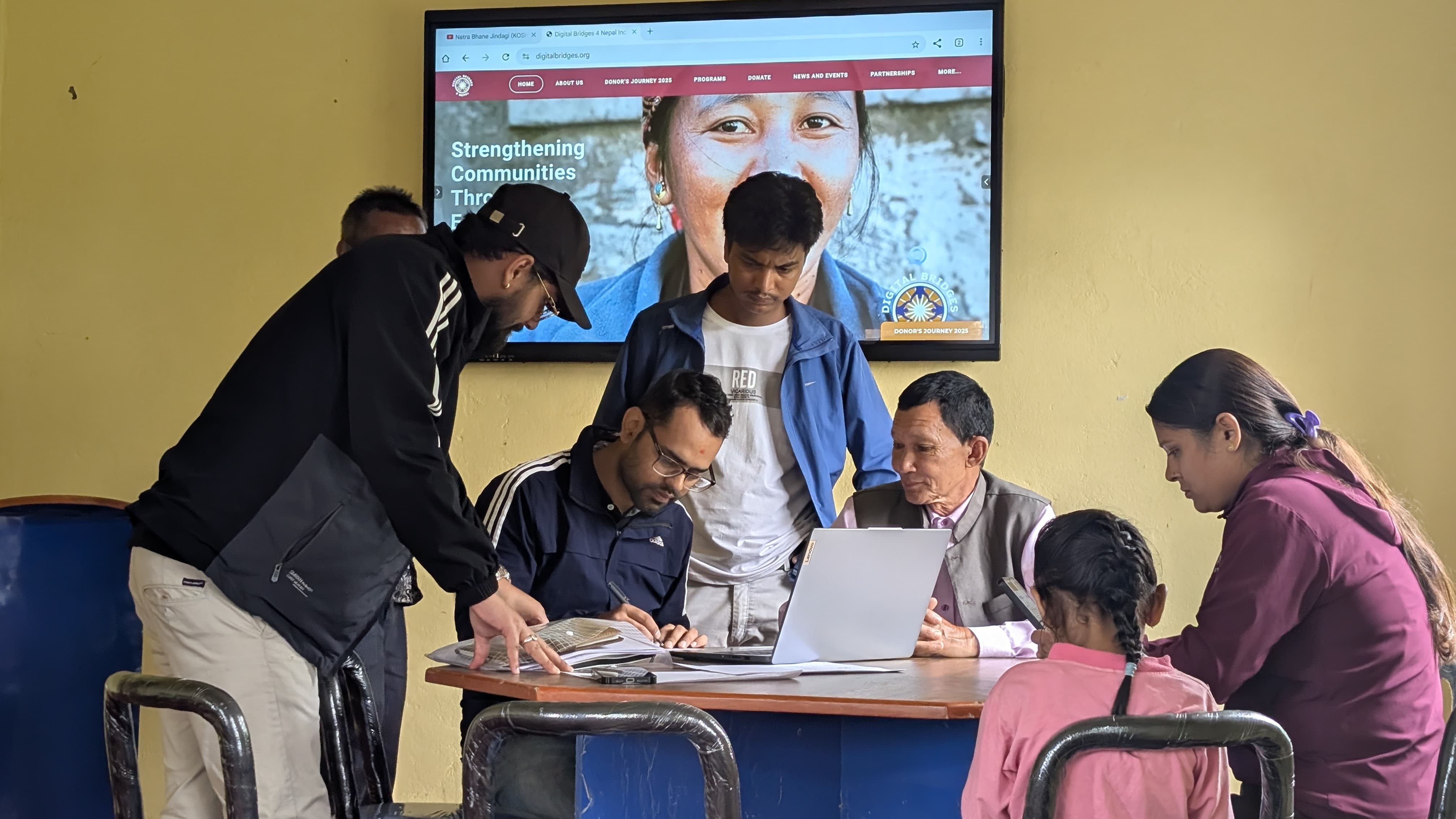
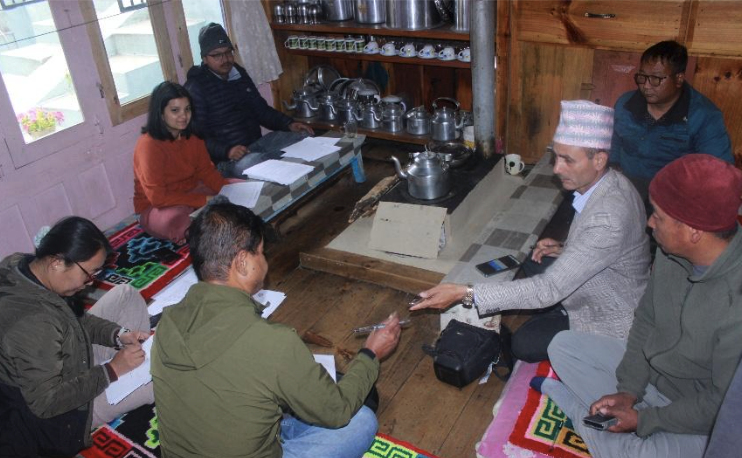
The project was implemented in close partnership with ward-level stakeholders, ensuring local ownership from the start. Ward 5 Chairperson Hom Bahadur Baramu and Ward 2 Chairperson Narayan Prasad Bhattrai both participated actively in planning and operationalization. Community onboarding sessions introduced residents, youth, and women’s groups to digital tools, virtual meeting platforms, and knowledge-sharing resources -with hands-on demonstrations guiding practical use.
Early outcomes include enhanced participation in municipal decision-making, reduced travel costs for ward representatives, and new digital literacy pathways for students, educators, and community members who previously had no access to these tools. The Mini CLEC model is designed to scale: DB4N and BTRM are already evaluating replication across the remaining wards, with integration of monitoring and evaluation frameworks to track community impact over time.


The CLEC at Shree Saraswati Secondary School, Bhimsenthapa Rural Municipality, was established as the third school in the municipality's coordinated expansion. The school serves 330 students across Grades 1–12, with 114 students from Grades 9–12 directly benefiting from CLEC-based learning - 60 female and 54 male.
Installation was completed April 29, 2025, despite a nationwide teachers' strike creating logistical challenges. The CLEC is equipped with movable collaborative tables, a wall-mounted Smart Board, and a laptop charging cabinet. Visual branding and interior design were professionally developed, creating an environment students visibly respond to.
Teacher onboarding ran May 13–20, 2025, with 17 teachers completing a one-credit professional development course developed in partnership with Kathmandu University School of Education (KUSOED) through its Continuing Professional Education Center. This formal academic accreditation represents a deepening of the KU partnership and a model for sustainable professional development across the network.
The results are already visible. Students report using tools like Google and ChatGPT to research science topics independently - exactly the kind of self-directed learning the CLEC was designed to unlock.

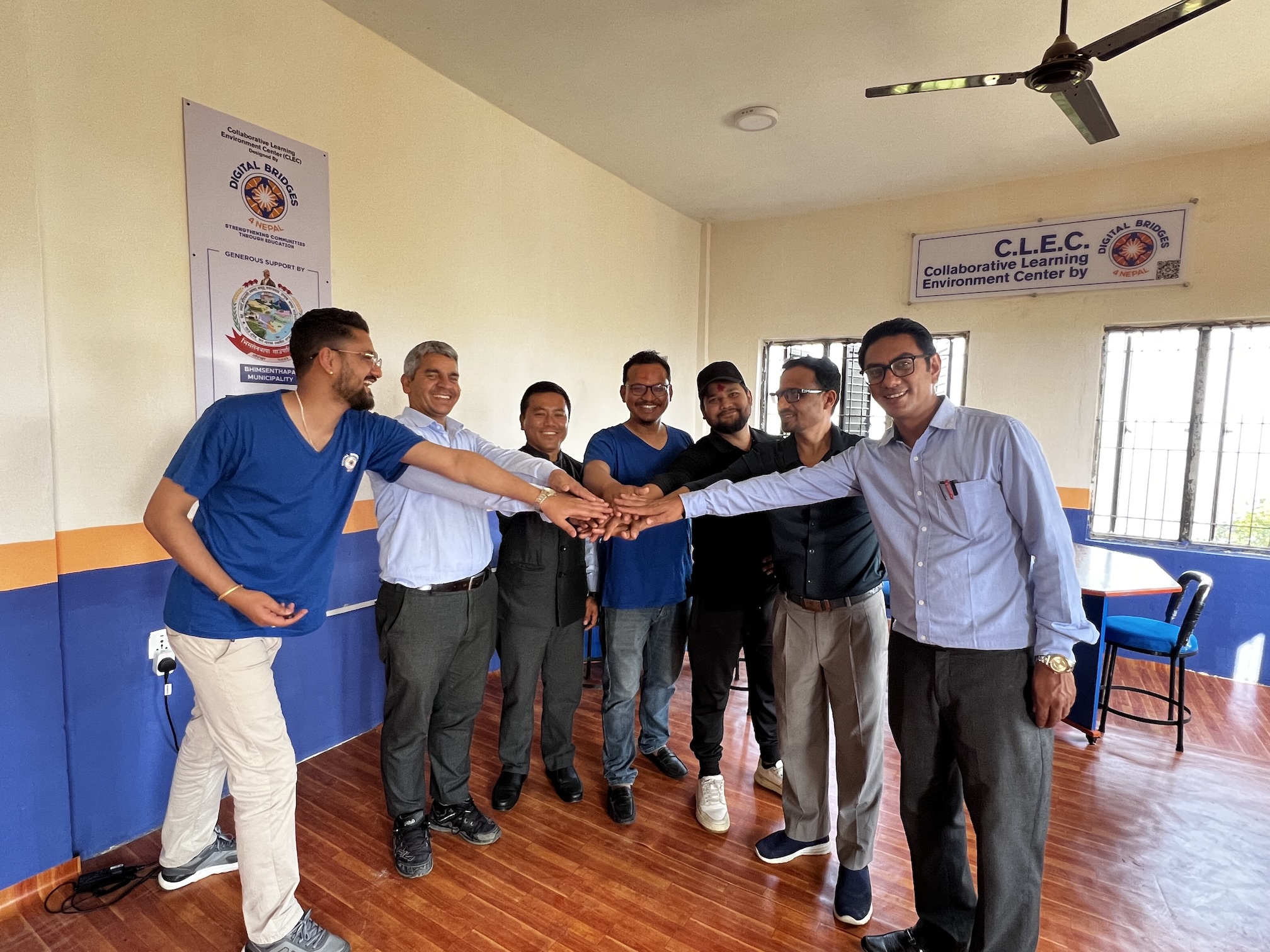


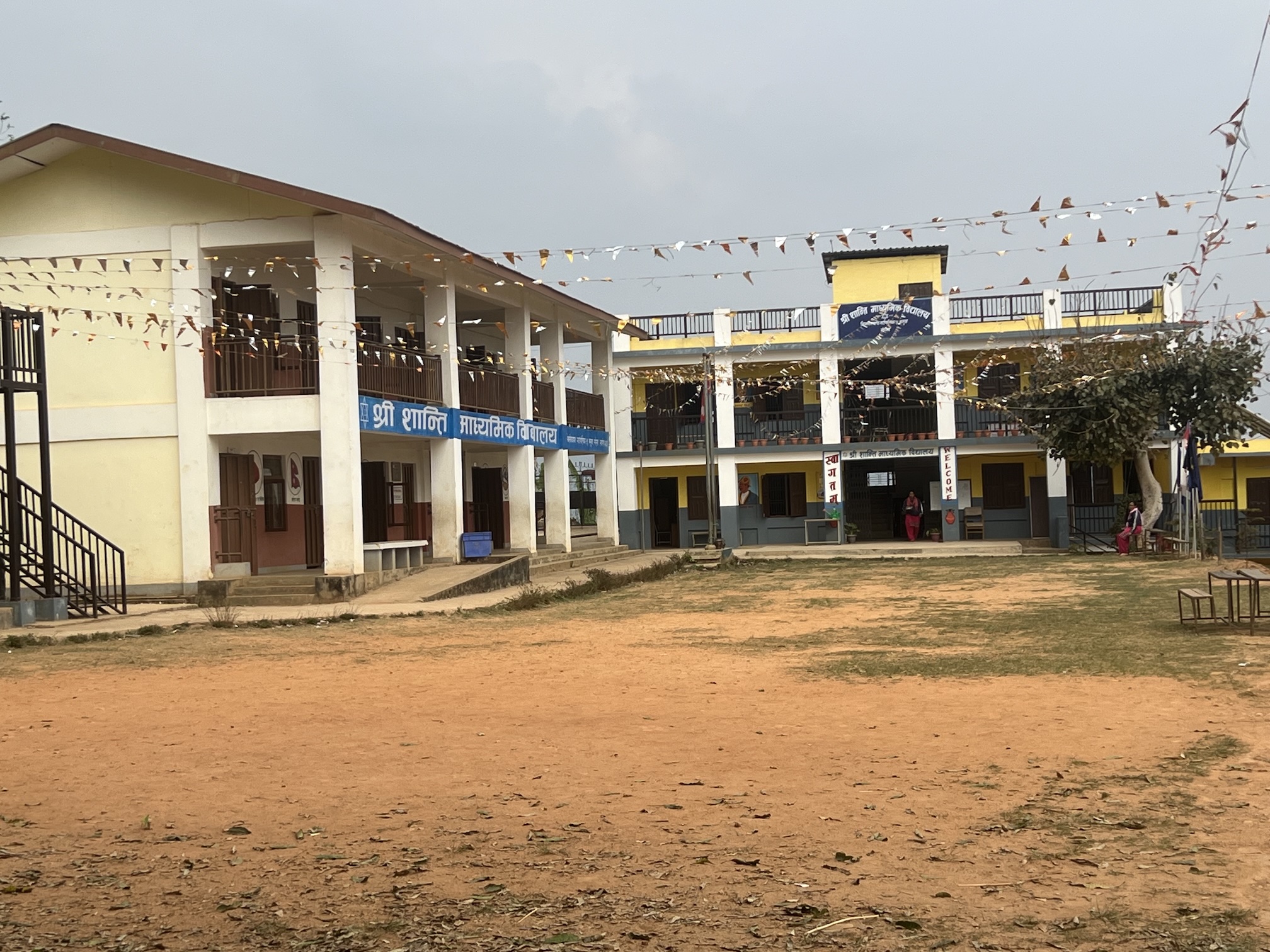
Shree Shanti Higher Secondary School, Ward No. 5, Baguwa, Bhimsenthapa Rural Municipality, serves as a community anchor in a ward of 1,346 residents - many of them historically excluded from digital education. The CLEC was established as part of the same coordinated municipal expansion as Bindrawati and Saraswati.
The CLEC is equipped with municipality-provided laptops, a Smart Board, collaborative furniture, and digital learning tools ensuring every student has a device for independent research. The classroom design promotes collaboration and active engagement - a deliberate shift from passive, rote-based instruction.
Direct beneficiaries include 65 students from Grades 9–12 (37 female, 28 male). Through shared resources and school-wide integration, an additional 145 students across Grades 1–12 benefit indirectly. The municipality's commitment to additional laptops in the next fiscal year ensures the CLEC will grow with the school's needs.
Teacher onboarding was conducted alongside the Bindrawati and Saraswati schools, creating a cohort of 17 educators across the cluster who trained together - strengthening peer networks between teachers across multiple schools, not just within one.
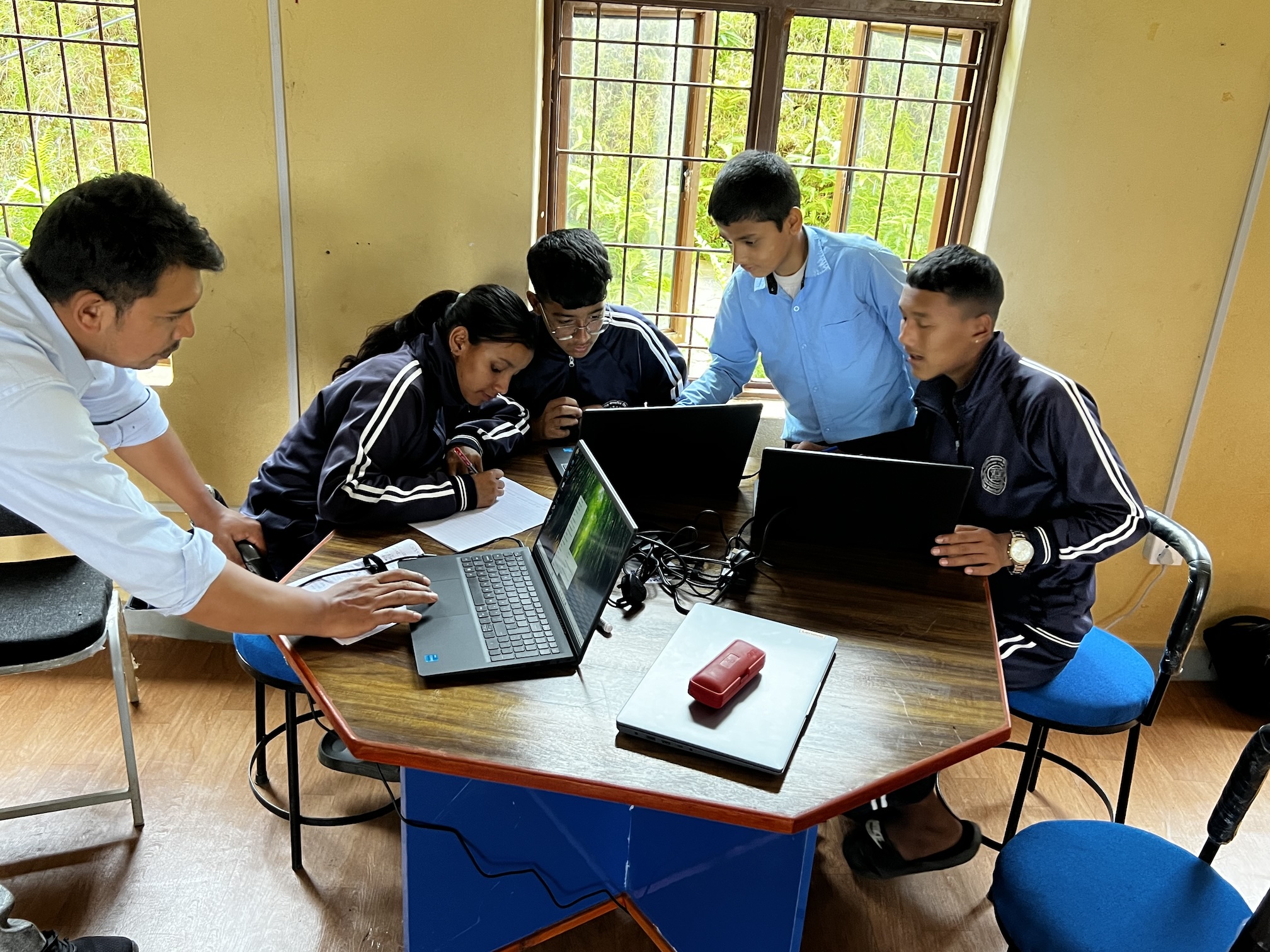
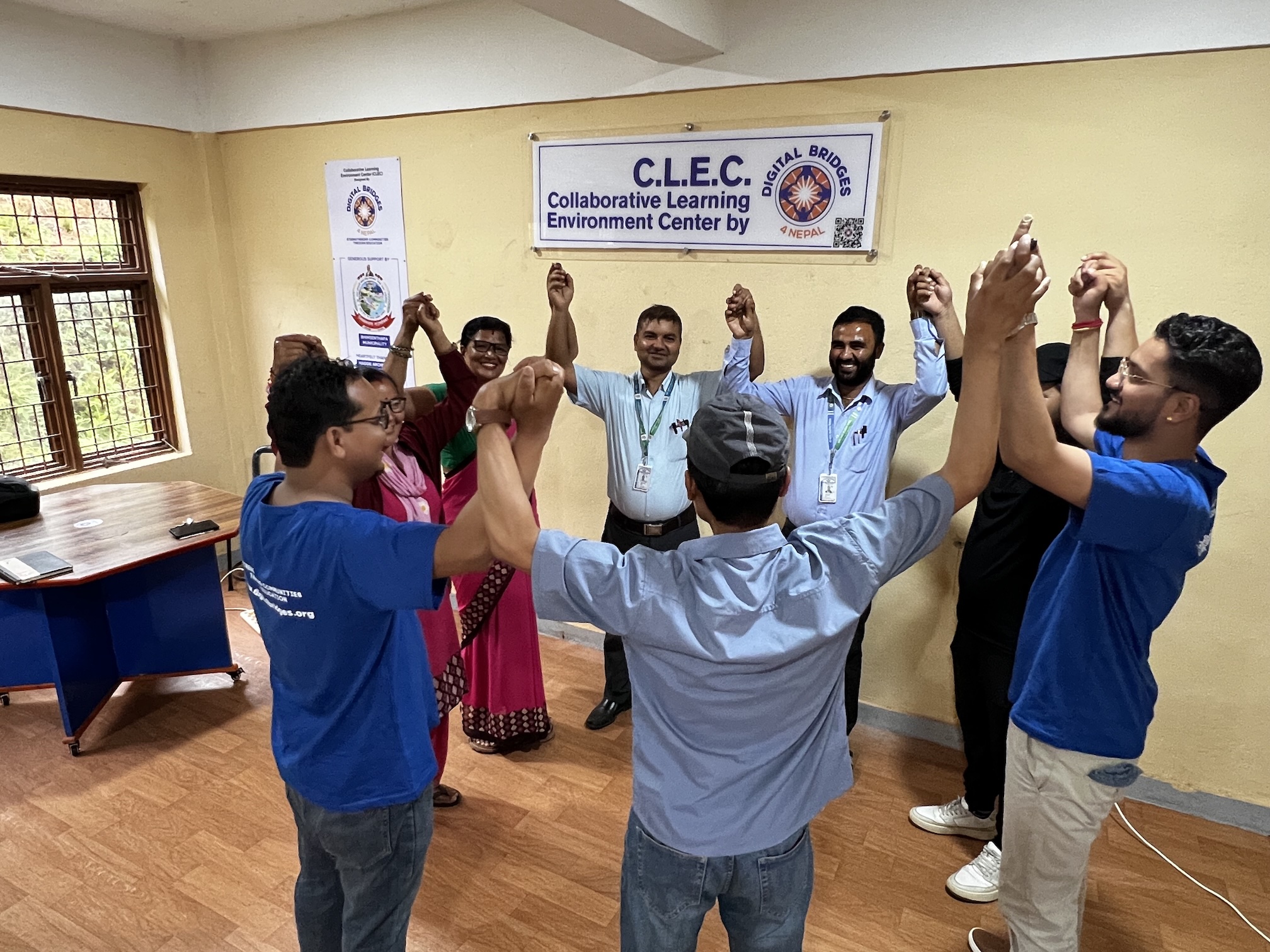


The CLEC at Shree Bindrawati Secondary School, Ward No. 1, Masel, Bhimsenthapa Rural Municipality, is part of the municipality's deliberate strategy to expand technology-enabled learning across all 35 schools. Following the impact of the Siddhakali CLEC, Municipal Chairperson Lok Prasad Banjara formally requested DB4N establish CLECs in three additional schools. Bindrawati was among the first selected.
The 345 sq. ft. classroom was renovated and equipped with mobile collaborative tables, a wall-mounted Smart Board, a laptop charging cabinet, upgraded electrical systems, and a solar power backup - ensuring uninterrupted digital learning even during grid outages. Installation was completed April 27, 2025.
The municipality committed to providing 12 laptops for initial operations, with 4 additional laptops planned in the following fiscal year - demonstrating strong local financial co-investment. Teacher onboarding ran May 13–20, 2025: 17 educators completed a one-credit professional development course on CLEC methodology delivered in partnership with a recognized teacher education institution.
Bindrawati is part of a growing cluster of CLECs within Bhimsenthapa being designed to share resources, teachers, and learning experiences across the municipality's network.
%20copy.jpeg)
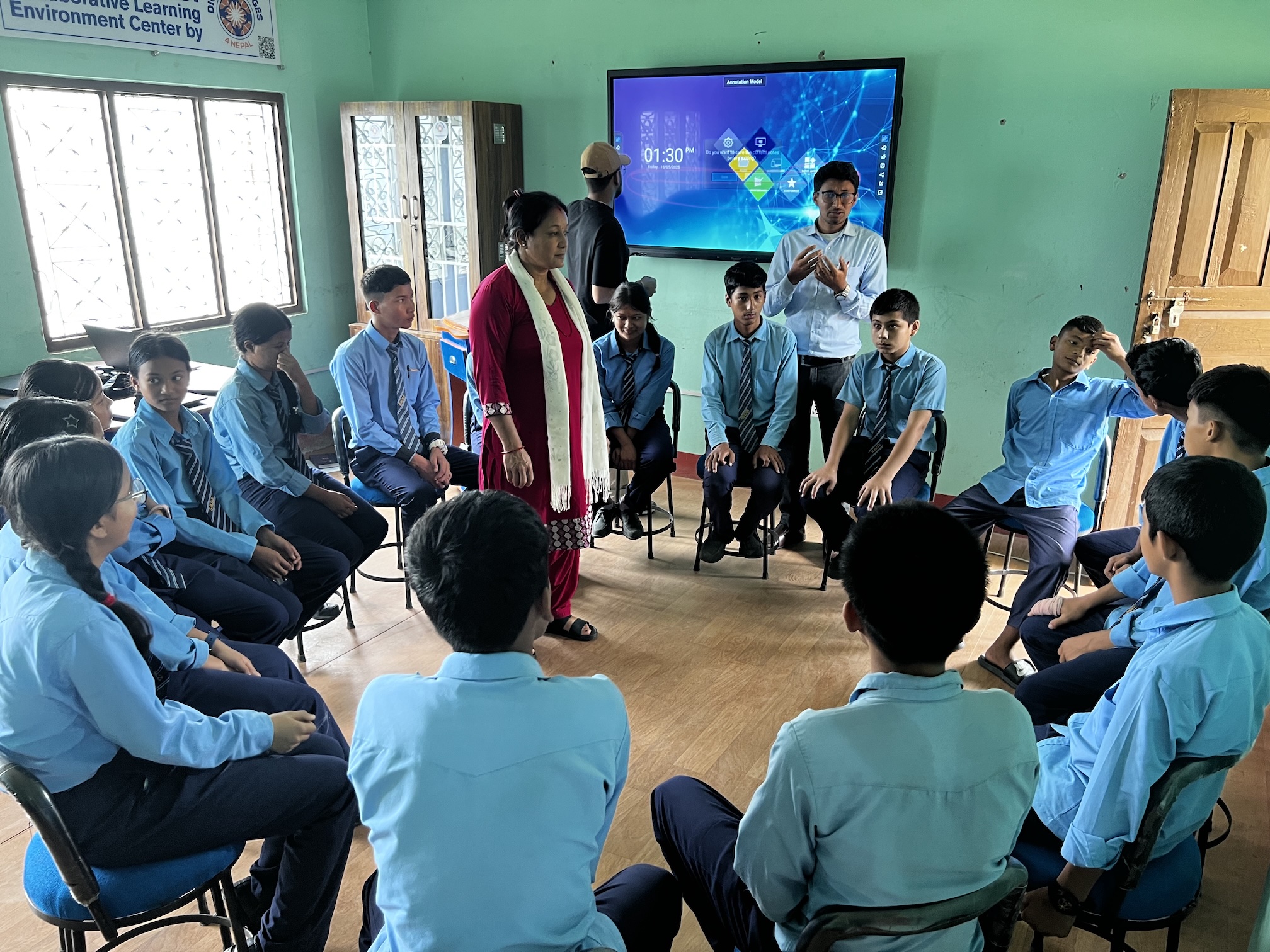
Following the success at Shree Siddhakali, the Mayor of Bhimsenthapa Rural Municipality made a direct request: bring the CLEC model to the municipal administrative building itself. The vision was a connected hub - a central Community Learning Environment Center linking all 8 wards, 35 schools, women's groups, youth clubs, and farmers' groups across the municipality.
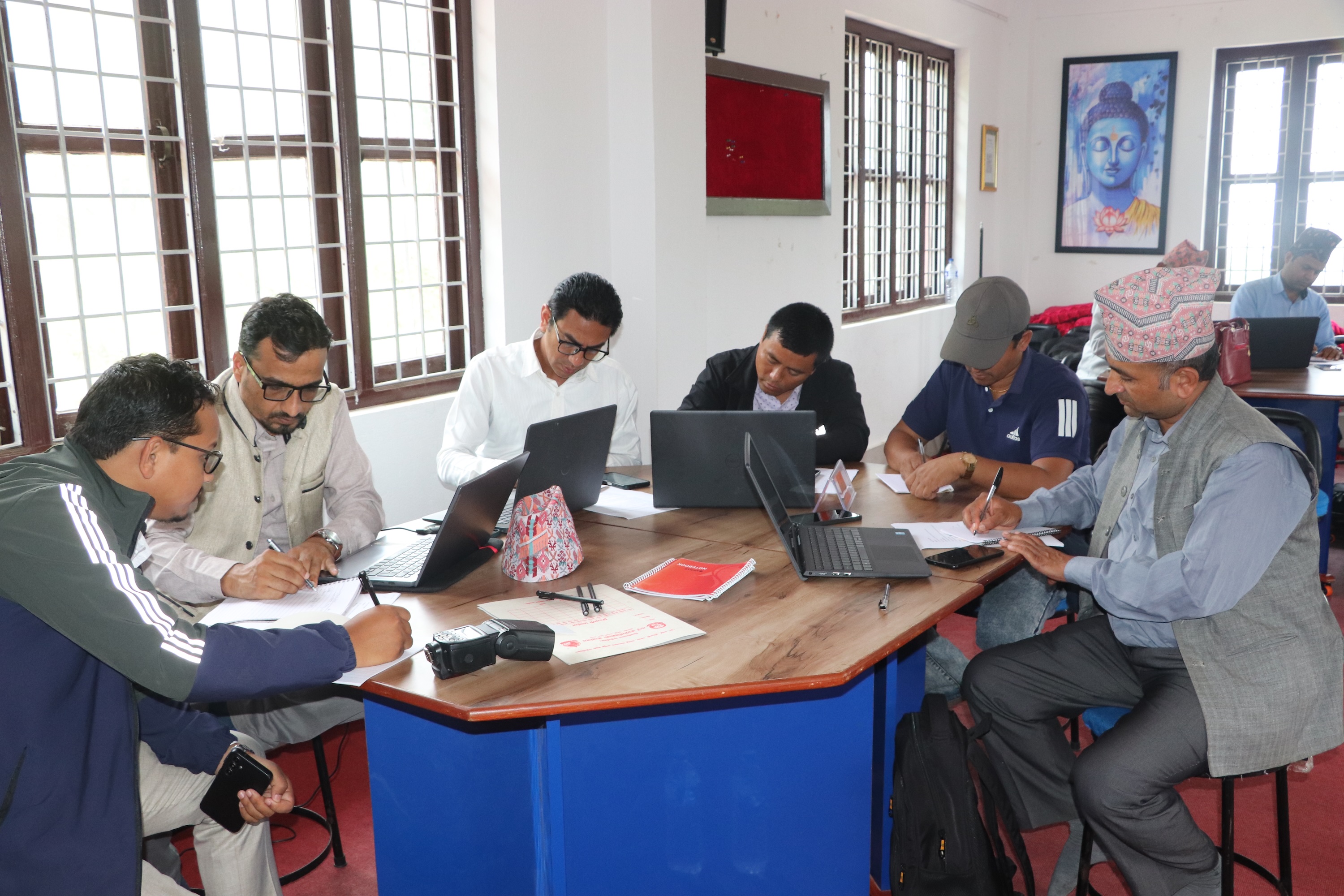
The BTRM Community Center functions as the Central Brain of the Gorkha hub. It is not a classroom - it is a governance and civic learning space. The facility holds 9 laptops, a Smart Board, a sound system, 9 mobile tables, 45 chairs, a secure laptop cabinet, and two dedicated pod-style tables for the Chairperson and Vice Chairperson. All equipment is on wheels and reconfigurable for different session types - from town halls to skills training to remote coordination meetings.
In May 2025, DB4N conducted a one-day pilot training for 25 participants: school teachers, municipal staff, and computer operators. The curriculum covered CLEC methodology, digital civic engagement platforms, remote connectivity tools, and town hall-style programs. Sessions were extended to mothers' groups, youth clubs, and community members - ensuring the CLEC serves the broadest possible base.
The BTRM Community Center represents a new dimension of the CLEC model: not just education for students, but digital infrastructure for an entire community's civic and economic life.


Shree Sarvajanik Secondary School sits in Baijanathpur, Ward No. 19 - a marginalized community within Biratnagar Metropolitan City. Despite its urban address, the school serves students from economically disadvantaged backgrounds with historically limited access to technology. The partnership was catalyzed by a powerful coalition: Somnath Ghimire of Build Better Biratnagar, Mayor Nagesh Koirala, and diaspora supporters in the United States.
The initial CLEC was installed in 2023. In 2025, the team returned to upgrade it into a fully collaborative learning environment - adding octagonal tables, a new Smart TV, enhanced internet infrastructure, and professional interior design. The upgraded CLEC now serves 300 students total, with 122 direct participants from Grades 9–12, of whom 72 are female and 50 are male.
Installation required significant hands-on work: painting walls, reorganizing the room, and rewiring electrical systems - all completed with the school principal, who painted alongside the DB4N team. The space was transformed in two days.
Enrollment at Sarvajanik has doubled since the CLEC arrived. This school has become a model for how an urban-adjacent school with limited resources can access world-class collaborative learning infrastructure through strong municipal partnership and diaspora engagement.


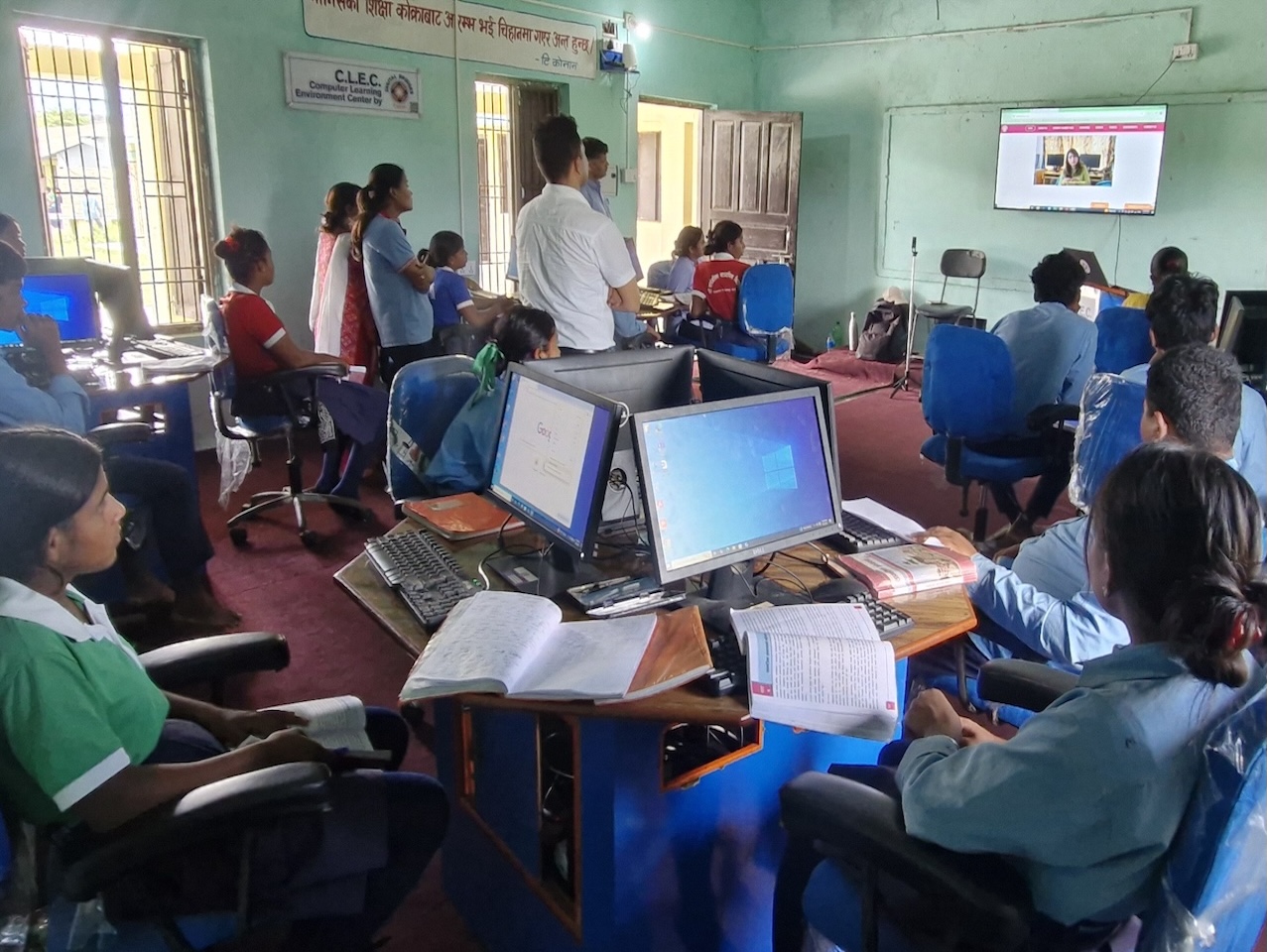
Shree Siddhakali Higher Secondary School in Tandrang, Ward No. 2, Bhimsenthapa Rural Municipality, Gorkha, holds a unique place in DB4N's history - it is the installation that changed everything. When the Mayor of Bhimsenthapa Rural Municipality witnessed the completed CLEC, he did not just express appreciation. He asked DB4N to return and replicate it in every one of the municipality's 35 schools.
The August 2022 scouting trip required navigating monsoon-damaged mountain roads, changing vehicles multiple times due to landslides. The team arrived after dark and spent the night at the school. The next morning, a formal meeting brought together the School Management Committee, teachers, the Mayor, and ward representatives. The Mayor's enthusiasm was exceptional - he had been fighting to bring exactly this kind of project to his municipality.
Installation began November 5 under the personal supervision of DB4N President Edmond Antoine. Students and teachers helped carry equipment from the truck to the CLEC room. Three days of structured onboarding followed - teachers and students learning collaborative pedagogy, digital facilitation, and CLEC methodology together.
At the handover ceremony, Mr. Ganesh Lamichhane, President of the Lions Club of Baltimore Nepalese, traveled from the United States to attend. The Mayor formally committed to expanding the model across all 35 schools in the municipality - a commitment that has since generated ten more CLECs in Gorkha.


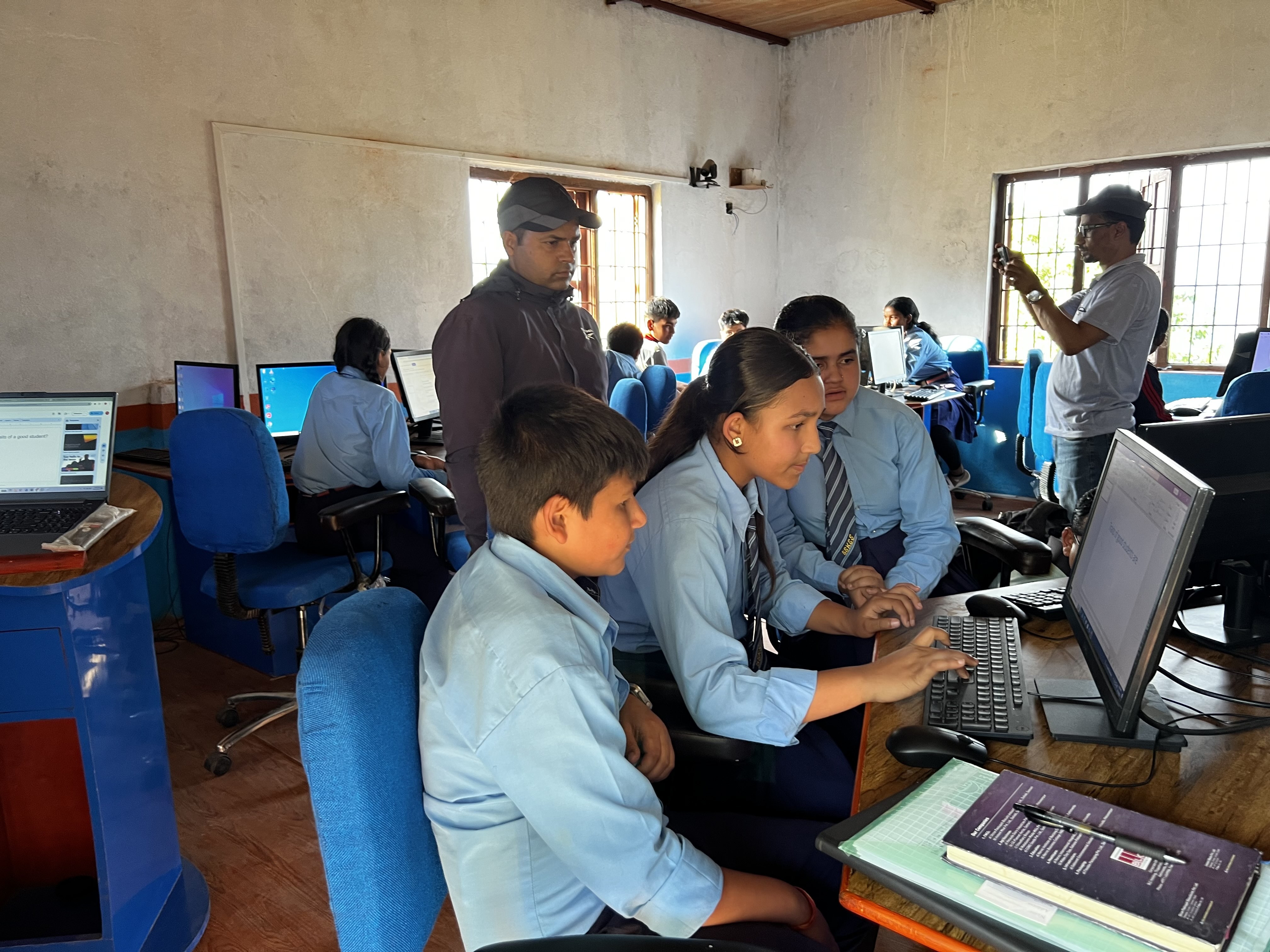

The CLEC at Shree Janahit Secondary School was born from love of homeland. Nabin Sherchan - a New York-based entrepreneur from Mustang - believed his hometown's students deserved the same pathway to digital education as any urban school. His nephew Bikal Sherchan, an alumnus, introduced DB4N to the Janahit Ex-Student Association (JESA), and a co-creation began.
Mustang is one of Nepal's most remote regions. For decades, students had minimal access to technology or collaborative learning. The COVID-19 pandemic made the gap devastating - while urban students shifted online, students in Mustang were effectively cut off entirely.
The scouting trip arrived by early morning flight in March 2022. Within a day, the principal, School Management Committee, and Mayor had all signed an MoU - the fastest stakeholder alignment in DB4N's history. The installation team drove two days from Kathmandu through difficult mountain roads and arrived safely with all equipment.
The CLEC room - 65 square meters - is among the most well-equipped in the network: 16 desktops, collaborative furniture, a Smart TV, remote-controlled camera, and full electrical and internet infrastructure. Engineering students from Grades 11–12 now use the space to teach peers AutoCAD - peer-to-peer learning that signals exactly the kind of community self-sufficiency DB4N aims to build.

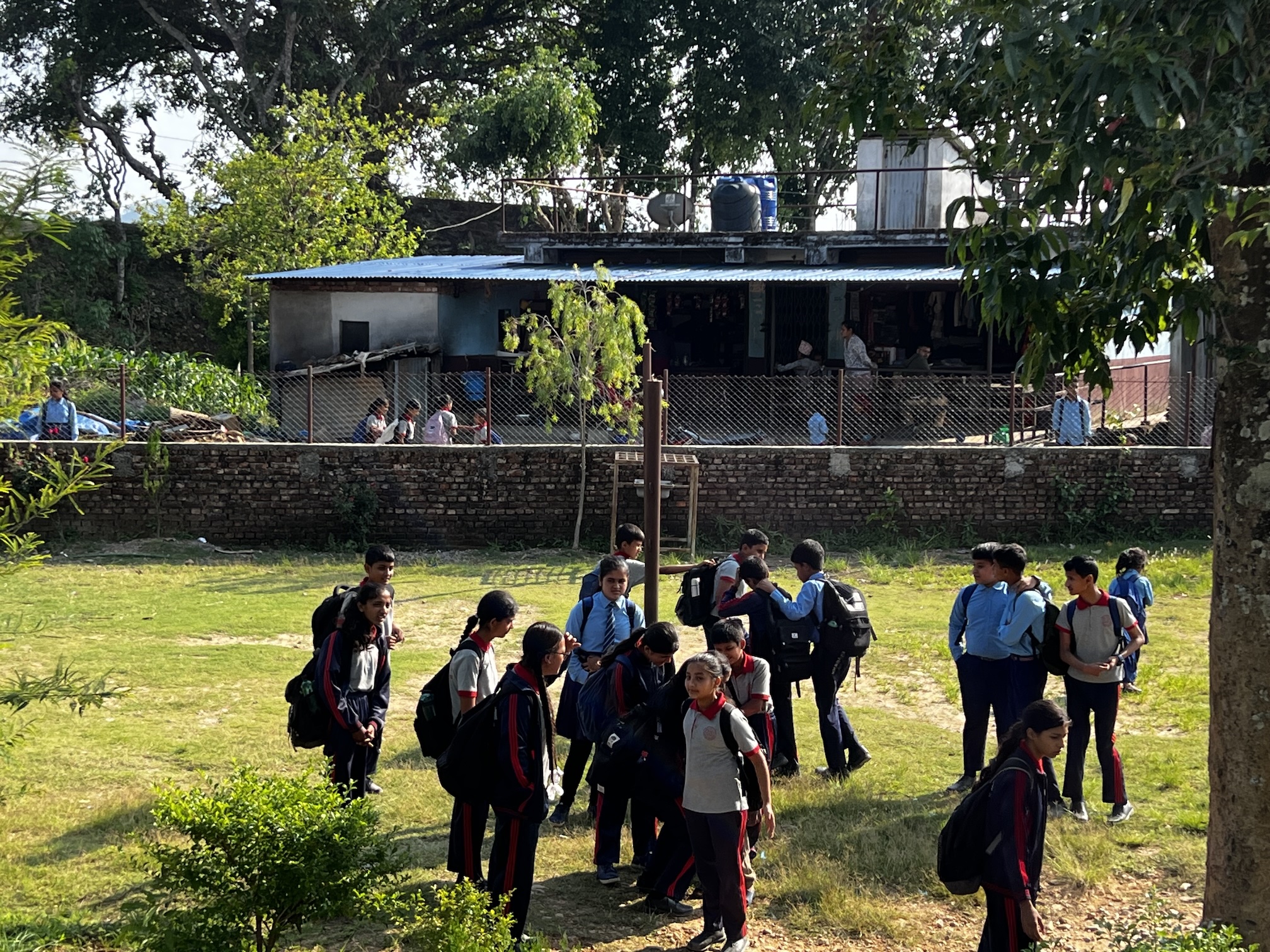

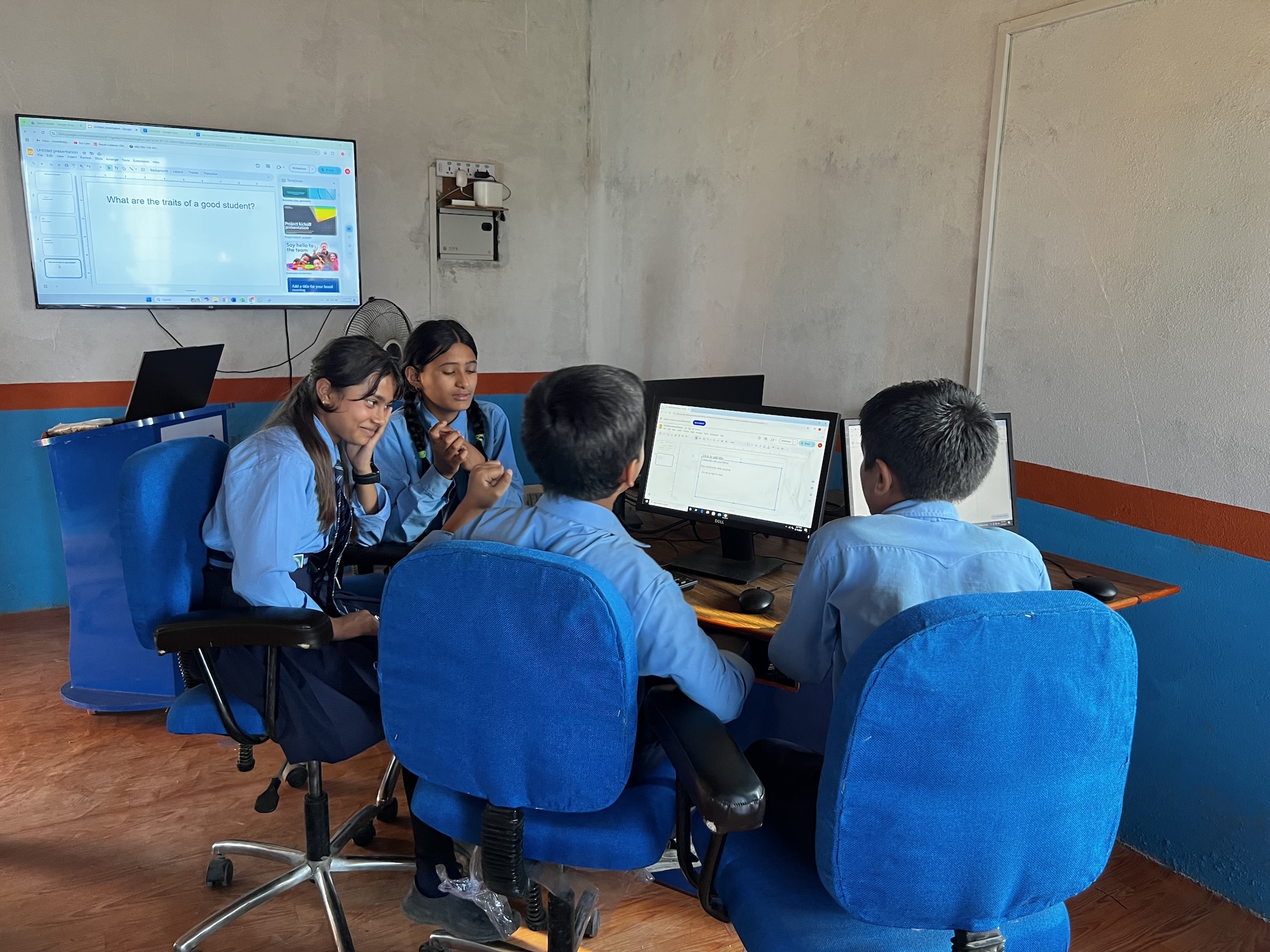
CLEC Thonche holds a special place in DB4N's story - it was the first project ever co-incepted with a community. Ghyalsumdo Sewa Sanstha (GSS), a diaspora organization with roots in Nason, approached DB4N with a simple idea: give back to the homeland. Local champion Rapke Lama led the effort, and together with DB4N, GSS co-funded the installation - proving that the CLEC model works as a community-owned initiative.
The journey was anything but easy. Plans were delayed by COVID-19. Then catastrophic floods devastated Manang District in 2021, destroying roads and damaging communities. DB4N treated this as urgency, not a setback.
On October 28, DB4N Chairman Jhabindra Kumar Subedi and Coordinator Prakash Shrestha made the scouting visit: 8 hours by taxi to Besisahar, then 5 more by jeep through flood-damaged, landslide-prone roads. In December, a delivery team drove 14 hours through the same terrain to bring the equipment - and installed everything the very next day.
The CLEC launched officially in March 2022 in the presence of the Mayor, Vice Mayor, School Management Committee, and DB4N President Edmond Antoine. Today it serves 122 students from Grades 9–12 - 63 female and 59 male - in one of Nepal's most remote districts. DB4N's core principle here: reach the unreached, not just the accessible.

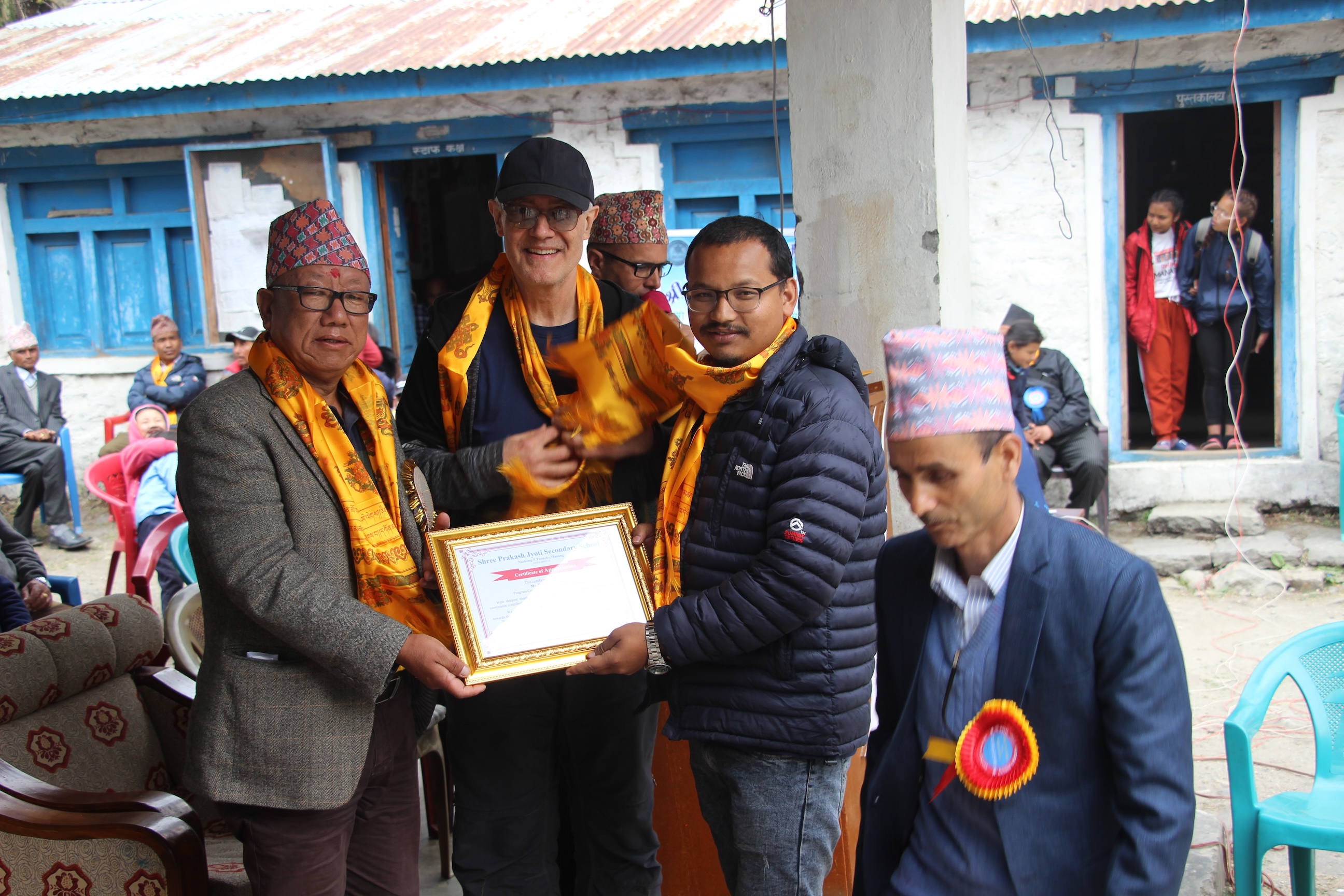
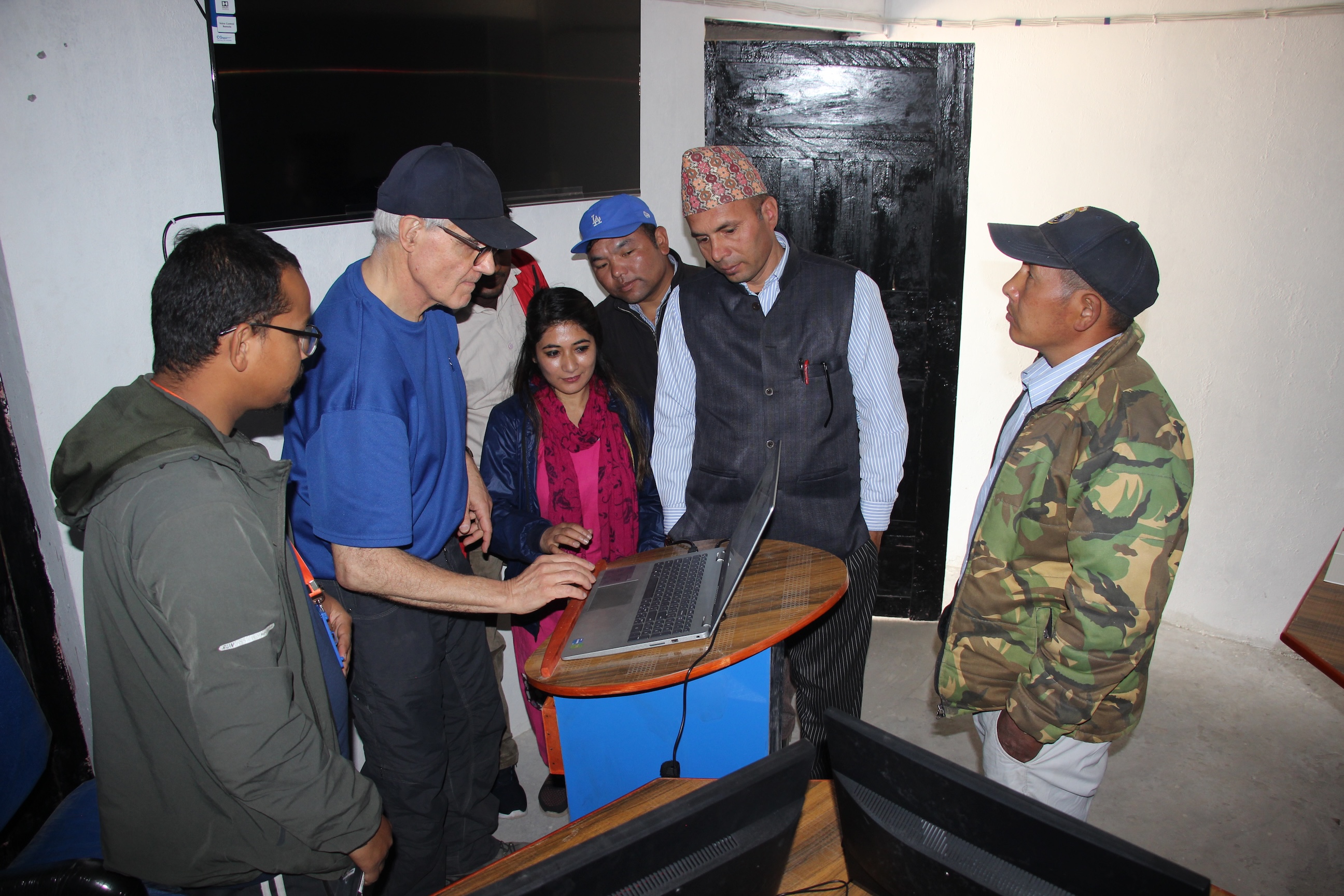
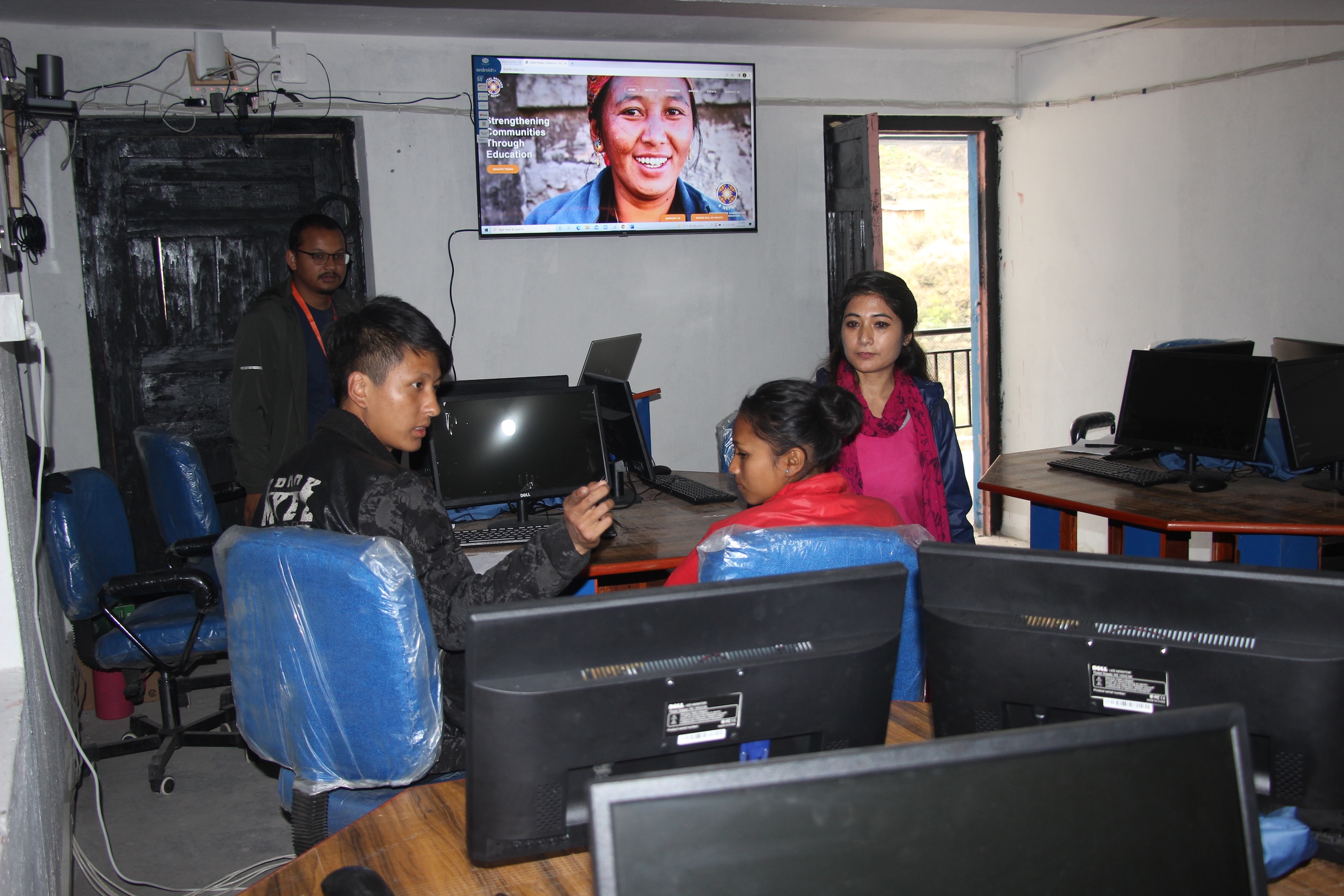
The partnership between DB4N and Kathmandu University School of Education (KUSOED) began when Ed Antoine was invited to speak to graduate students about co-inception leadership. What started as a classroom conversation became a formal Memorandum of Understanding signed in November 2019 - making KUSOED DB4N's core academic and research partner.
KUSOED serves more than 800 students across B.Tech Education, PG Diploma, Master's, MPhil, and PhD programs and has produced over 1,900 graduates who are now teachers, principals, and education leaders across Nepal. The CLEC installed here functions as a national research hub, demonstration space, and teacher training center for the entire DB4N network.
Faculty, researchers, and future teachers use the CLEC to test collaborative learning strategies, hybrid teaching models, and digital facilitation techniques before they are rolled out to rural schools. Under the MoU, KU research assistants funded by DB4N study peer learning dynamics, student engagement, and digital tool integration - generating the evidence base that shapes every new CLEC installation.
Despite COVID-19 restrictions forcing a remote-first launch in fall 2020, the partnership remained active. The CLEC's remote-controlled camera, Smart TV, and mobile podium allowed instruction to continue in hybrid format, and KUSOED emerged from the pandemic with a reputation as one of Nepal's most innovative teacher education institutions.
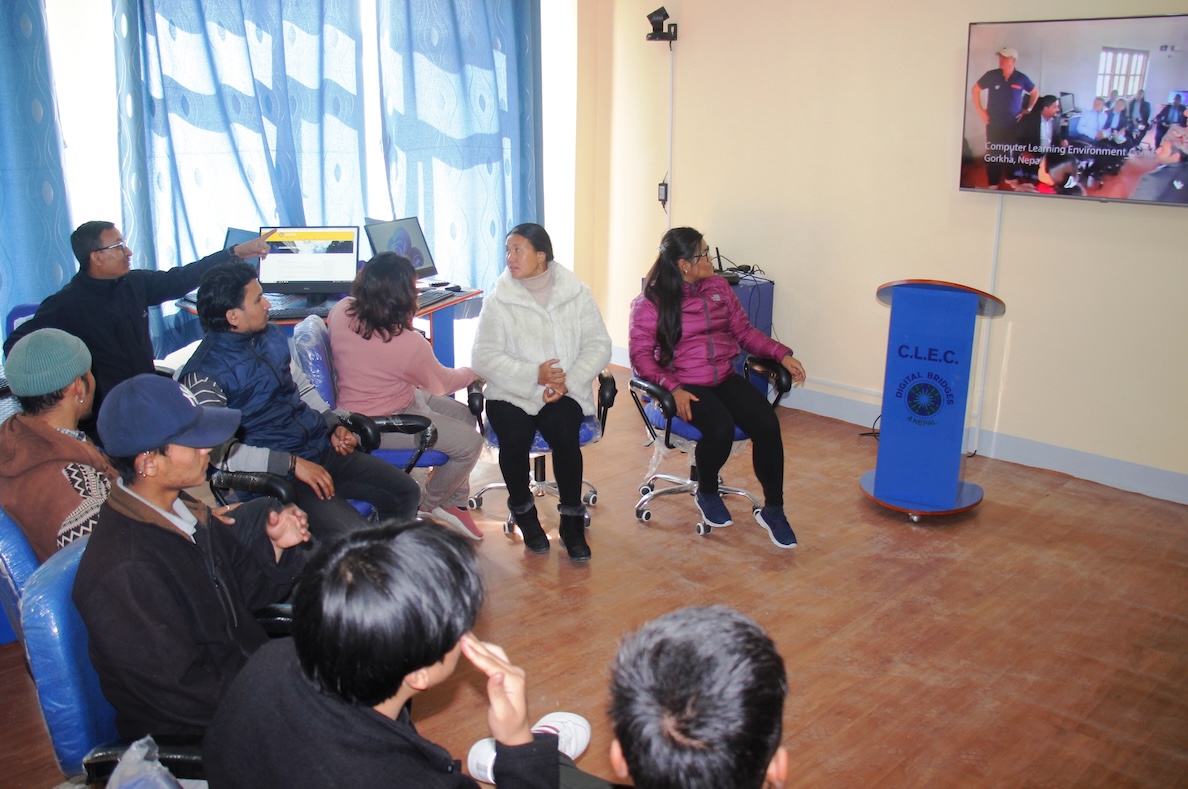
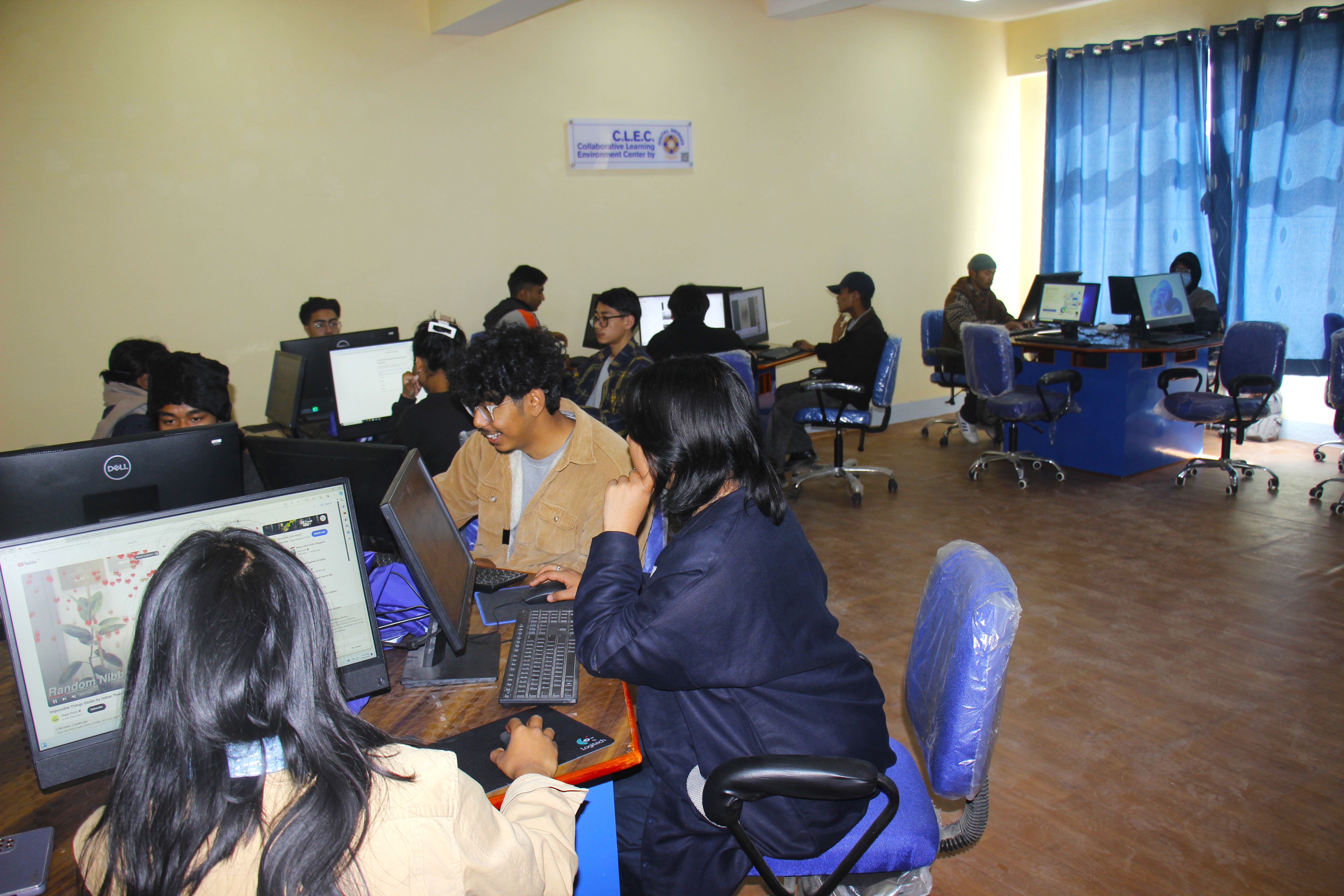
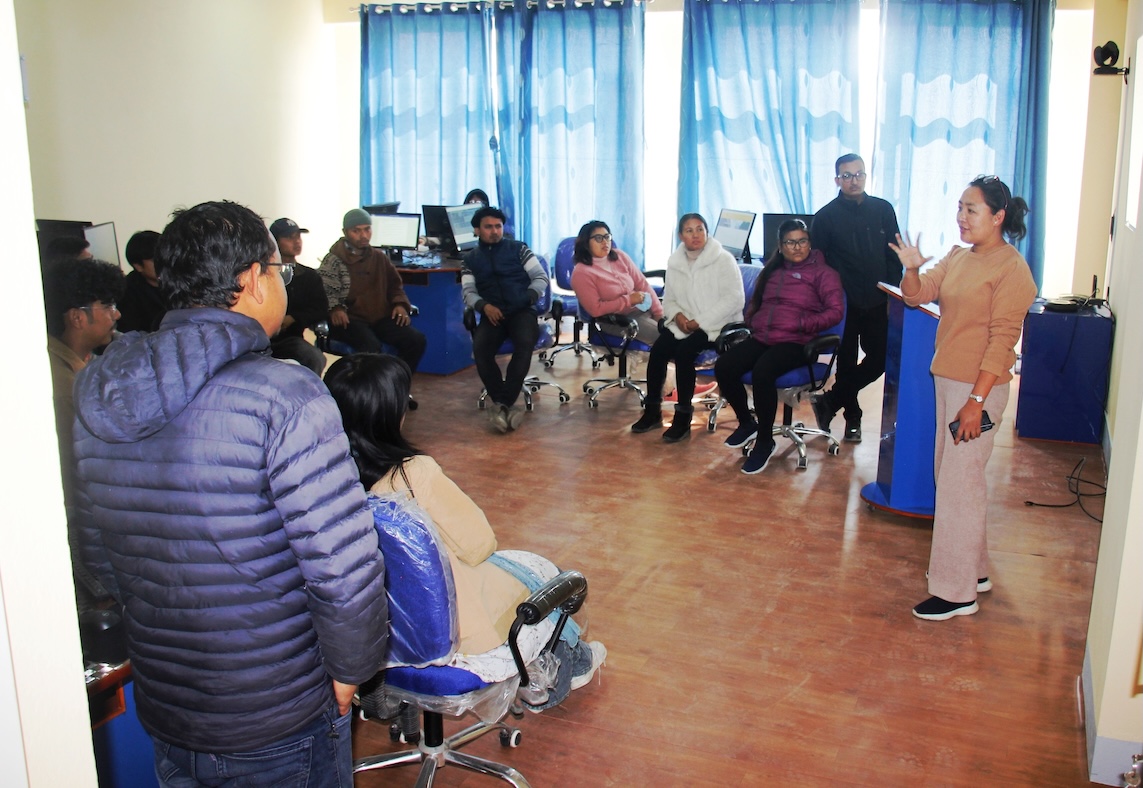
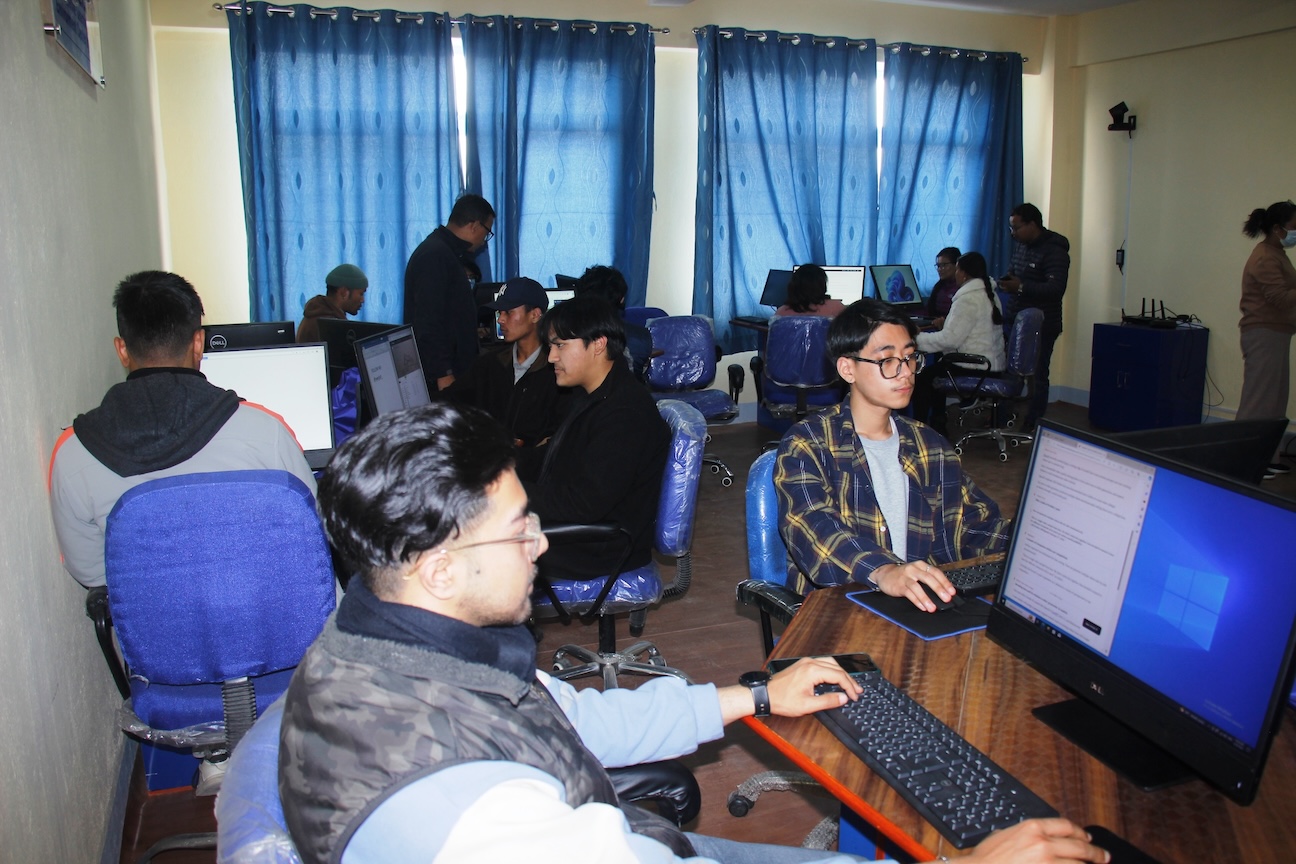
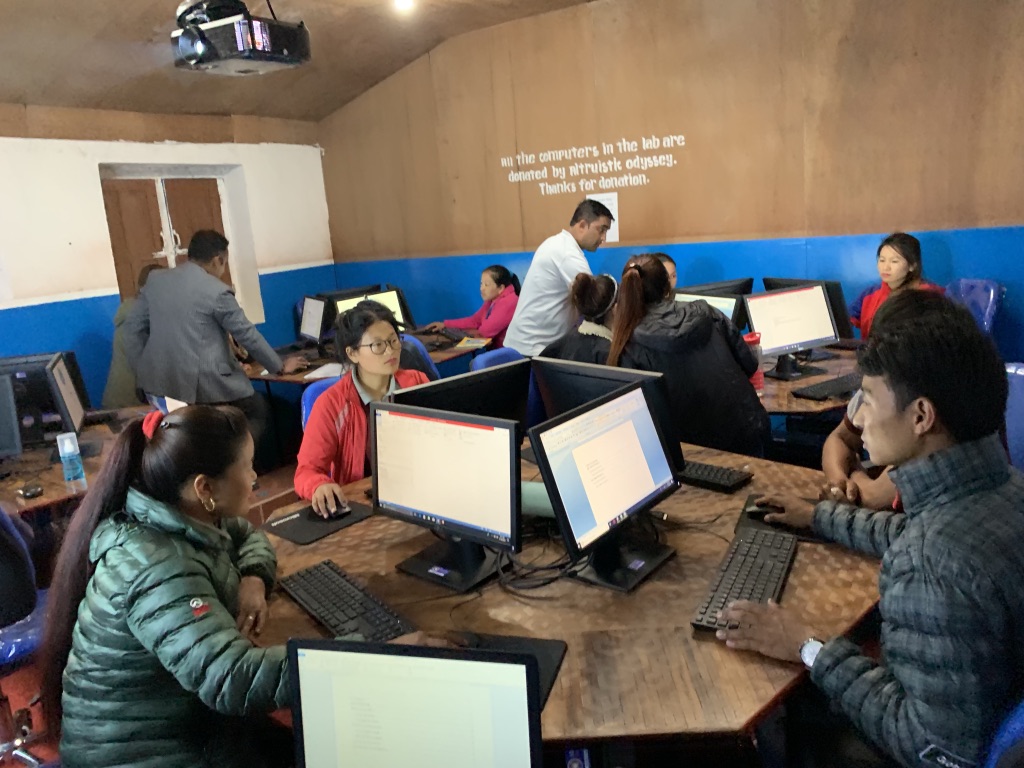
Sotang Public Campus sits in Ward No. 4 of Sotang Rural Municipality, accessible only by crossing a suspension bridge over the Dudh Koshi River. When DB4N first visited in 2017, the campus had just launched a Bachelor of Education program - but no way to teach the ICT component the Nepali government now required. Students who needed computer skills were forced to travel to Kathmandu and spend NPR 10,000–20,000 for basic training. DB4N saw the gap and made it the mission.
The CLEC was built in two phases. In 2018, the team delivered foundational ICT infrastructure: 8 desktop computers, monitors, a router, and a power generator to handle frequent outages. In 2019, custom-designed collaborative furniture arrived alongside additional IT equipment and a video projector - transforming a standard computer lab into a full Collaborative Learning Environment Center.
Strong community partnerships drove the project from the start. Campus Chief Ishwor Timalsena, Ward Chairperson Shyam Kumar Khaling, and community champion Laxmi - a retired health worker and fierce education advocate - all played active roles. DB4N coordinator Prakash Shrestha spent two full weeks on-site refining the installation and teaching classes.
The results speak for themselves: students in Sotang now pass ICT exams at a 100% success rate. One graduate started an innovative farm connecting with agricultural networks in Canada — staying in his community instead of migrating to the city. That is what a CLEC is designed to make possible.

.jpg)
.jpg)